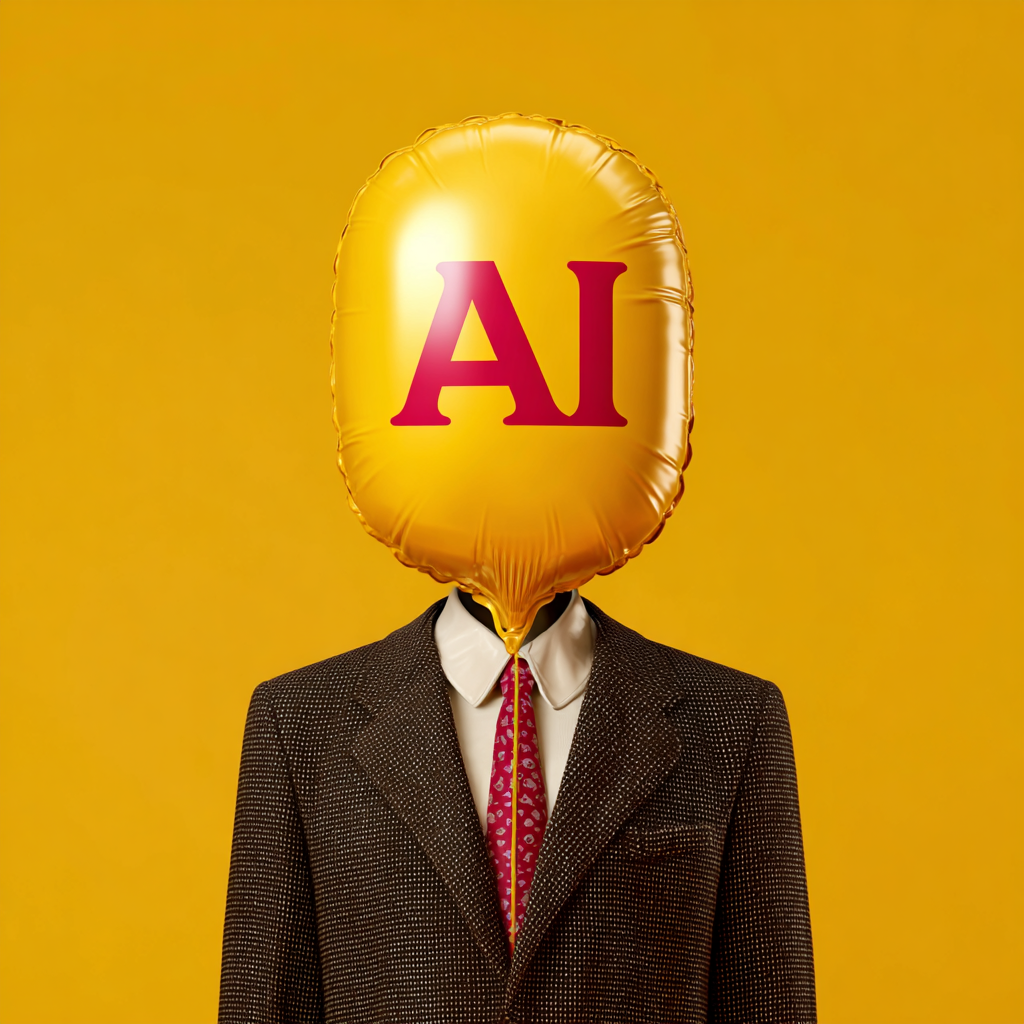

You and I are living in an era of magic. I use AI nearly every hour of the day to be wiser, bolder, and more creative.
In a way, AI has even become my mentor.
That might sound strange, but hear me out.
I wrote a post recently noting that this question: “Who decides the safe limits of superintelligence?” could be a turning point in human history.
As I wrote the draft of this post, I felt angry and even scared about the prospects of weaponizing AI, and this was apparent in the tone of the article.
I uploaded the draft to Claude before I published and asked, “Is this post balanced? Did I miss anything?”
Claude responded, “Mark, this is not you. Your thesis is emotional and underdeveloped. You are known for your fairness and intellectual honesty. Here are some ideas to make it better.”
And the ideas were pretty harsh … and much appreciated.
I generally work alone. In this case, AI wasn’t just a muse or editor; it intervened as a wise friend, keeping me on brand. AI is helping me to be wiser, bolder, and more helpful in this world.
I have neither turned my life over to AI and nor do I feel threatened by it. My career has become AI-shaped, conforming to the new superpowers and opportunities of a magical technology.
Instead of doomscrolling about layoffs, how can we all create an AI-shaped career?
Creating the AI-shaped career
Let’s start with some advice from my friend Azeem Azhar. Azeem is probably the most connected person I know, and so he’s able to tune into the priorities of a wide range of industries. and his supremely interesting Exponential View Newsletter.
Here is his advice:
1. Ship end-to-end projects

2. Grab managerial experience early
Run standups, lead sprints, and coordinate small teams if you have a chance. Volunteer to own small scopes like roadmap reviews and stakeholder check?ins, to build judgment and trust.
3. Build domain fluency and networks
Learn how people in your field think and speak. It signals maturity and reduces perceived hiring risk. Read primary sources and talk to operators. Join a niche community or meetup and ask specific questions.
4. Choose costly and credible signals, such as an MBA
Managers want evidence of commitment. If a degree isn’t feasible, pick rigorous alternatives – selective fellowships, competitive certifications, or shipping a demanding public project.
5. Use AI well
Build agents, audit outputs, and integrate them into real workflows. You could be the person who sets the AI standard at your next company – we’re still early, and practical expertise is scarce. Track gains (time saved, error rates, throughput) and document playbooks so others can adopt them. Push for small, safe pilots and iterate fast.
The implications for sales and marketing
Let’s get more granular. Most of the people reading this article are in sales and marketing. How do we have an AI-shaped career in that profession?
6. Become impossible to replace in customer relationships
AI may automate tasks, but trust, empathy, and emotional resonance are still the human differentiators.
People want to buy from, partner with, and follow humans they feel connected to.
- Build a personal brand in your niche—be findable, memorable, and known.
- Develop deep customer fluency: their worldviews, their blockers, their aspirations.
- Become the person who delivers difficult news well, handles nuance, and reads a room.
This is the “Most Human Company Wins” applied at the individual level. AI can crank out emails, landing pages, and pitches. But it still can’t feel the customer.
7. Build a Portfolio of Evidence, Not Just a Résumé
AI is making hiring faster and more automated, but that also means résumés look more similar. Portfolios, demonstrations, and proof-of-work become far more powerful signals than job titles or bullet points.
- Publish case studies, screen recordings, agent demos, prototypes, or thought pieces.
- Document your projects in public spaces (LinkedIn, GitHub, Notion, Substack).
- Practice “building in public”—it shows momentum and reduces perceived hiring risk.
8. Become the human face of your brand
The personal brand is our last line of defense against AI. If you are KNOWN in your industry. AI can mass-produce content, but it can’t replicate an authentic, trusted, known human.
No matter what happens in this AI world, we will seek verification, validation, insight and comfort from real humans. The only career equity we can carry with us is our personal brand. Are you known or not?
I teach the best personal branding class in the world to help you determine:
- Your place in a crowded business eco-system
- Establishing the presence, reputation, and authority to break through
- Strategies to get your story out to an audience that matters
- Specific ideas to give your brand an edge
Being “Known” is the strongest career moats in the AI era.
9. Become an experience designer
Your customers are hungry for connection and live experiences. This is a uniquely human acitivy.
We’re already seeing a backlash as young people seek more shared experiences in their online world.
- Learn to design workshops, events, roundtables, and customer communities.
- Study experience design, service design, and community management.
- Become the person who can create moments of belonging and transformation.
10. Lead a brand community
In Belonging to the Brand, I boldly predicted that community will be the last great marketing strategy, and that is backed up with evidence.
Here’s the good news. AI is not going to build and run a human community. Community might be the only type of marketing people actually seek out because we need human connection.
This book goes into detail about how to build and nurture a brand community, but the main ideas are:
- Find an intersection of the purpose of your company and the purpose of your customers
- Create an online and/or offline space of trust and safety
- Reward community members and assure they are seen and heard
The AI-shaped career
Here’s the simple truth: none of us can fully predict where this is going, but we can decide how we’re going to show up for it.
An AI-shaped career isn’t about becoming more machine-like. It’s about becoming the most unmistakably human version of ourselves — more curious, more connected, more courageous.
If you build trust, create experiences that matter, show your work, and become known in a meaningful way, you won’t just survive this transition. You’ll stand out in it.
The future doesn’t belong to the people who race against the machines. It belongs to the people who double down on the humanity the machines can’t touch.

Follow Mark on Twitter, LinkedIn, YouTube, and Instagram
Illustrations courtesy Mid Journey