

 You’re in marketing for one reason: Grow. Grow your company, reputation, customers, impact, profits. Grow yourself. This is a community that will help. It will stretch your mind, connect you to fascinating people, and provide some fun along the way. I am so glad you’re here. -Mark Schaefer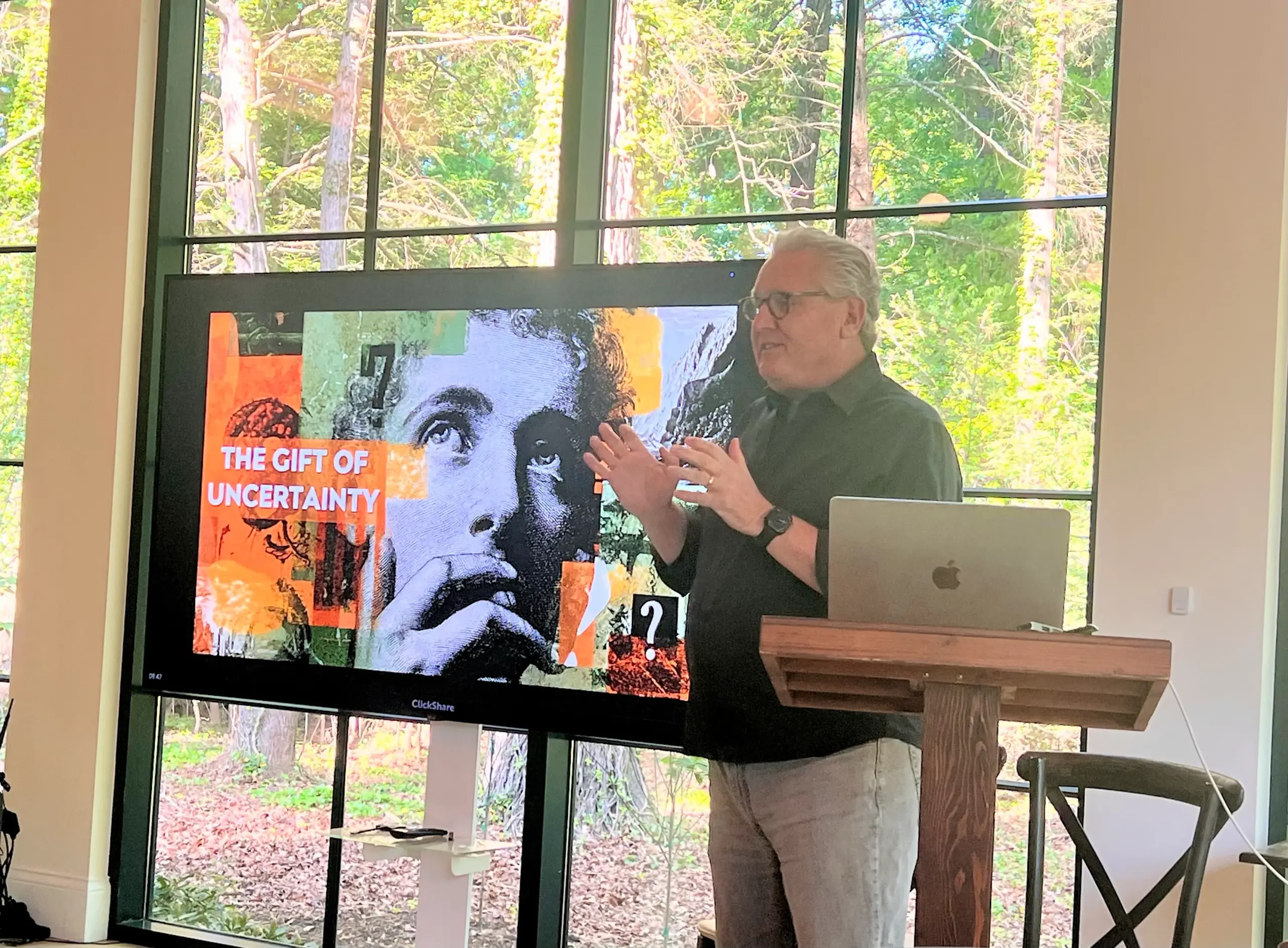
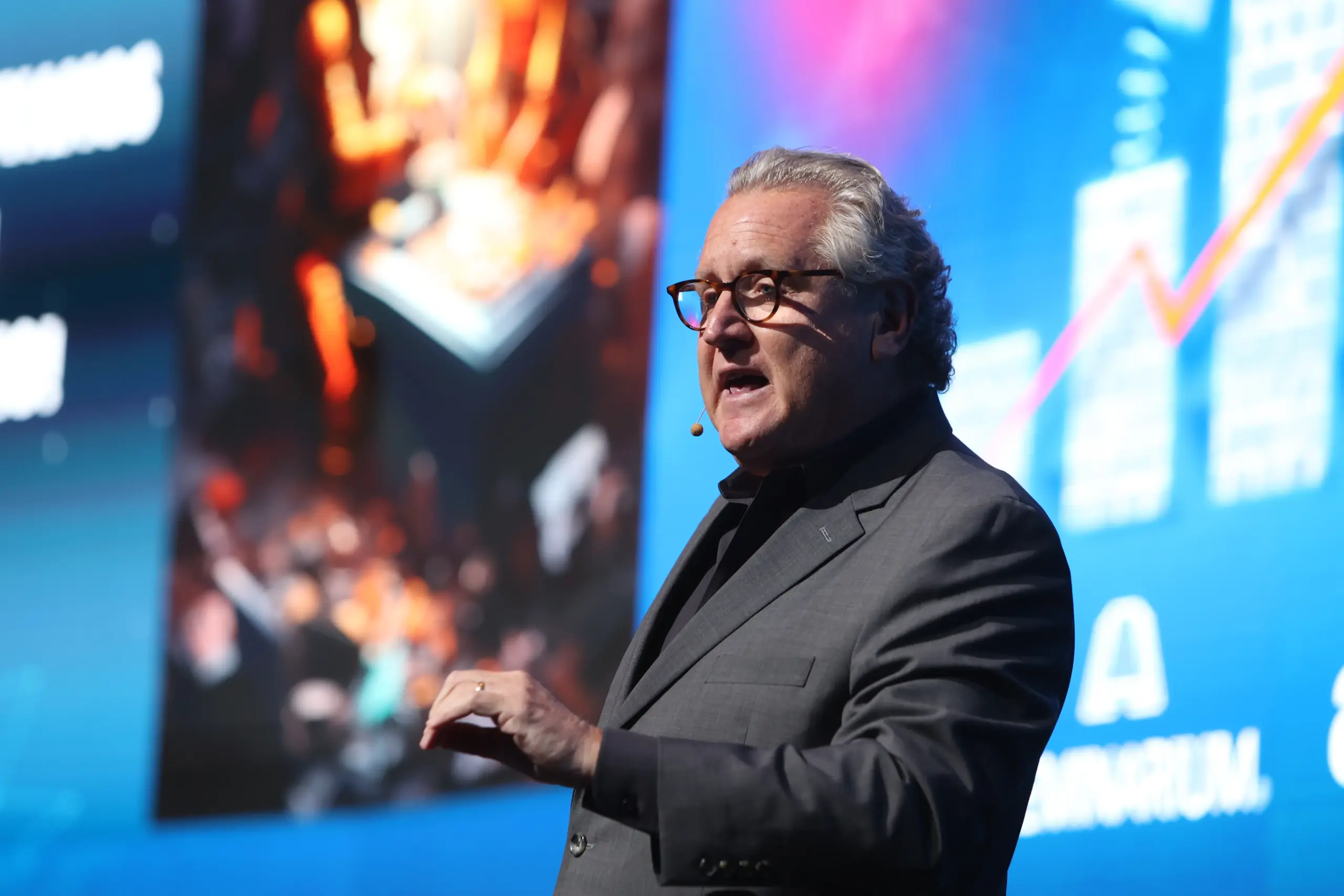
I’ve been speaking on stages around the world for more than two decades. I’ve delivered keynotes on content marketing, personal branding, artificial intelligence, and the seismic shifts reshaping how we connect with customers. Most of the time, I leave a stage knowing the talk landed well — or didn’t.
This one was different.
After a recent keynote built around a concept I’m calling The Gift of Uncertainty, I had people come up to me with tears in their eyes. One attendee told me it was the highlight of the entire event. Another said she was going to read her notes every morning. A marketing executive told me it reframed how he thought about leadership — not just in his job, but in his life.
I don’t say that to preen. I say it because it matters that you understand why this talk is resonating right now, and why I believe it’s exactly what audiences — your audiences — need to hear in this moment.
We Are Living in a Polycrisis
Let me start with a word you may not have encountered: polycrisis.
A polycrisis isn’t simply a situation where multiple bad things are happening at once. As one scholar put it, it’s when “the whole is even more dangerous than the sum of the parts.” The interconnection of crises — economic, geopolitical, technological, social — creates a kind of compounding dread that most of us feel but struggle to articulate.
And your attendees feel it. Deeply.
We are living through a new world disorder. Malignant uncertainty isn’t a headline anymore — it’s the status quo. The marketers, executives, and business leaders sitting in conference rooms and convention centers across the country are walking into your events carrying a weight they can’t quite name. They’re doom-scrolling between sessions. They’re anxious, fatigued, and quietly wondering whether their instincts still apply in a world that changes faster than their planning cycles.
What they are not getting — from most stages — is an honest, grounded, practical framework for how to think about uncertainty itself.
That’s the gap this speech fills.
The Reframe That Changes Everything
Here’s the central idea, and it’s deceptively simple:
Uncertainty isn’t a flaw in the system. Uncertainty IS the system.
For most people, uncertainty registers as threat. Something to be solved, reduced, managed, or endured. Our entire professional culture is organized around the elimination of uncertainty — market research, forecasting models, strategic planning, data dashboards. We spend enormous energy trying to achieve a certainty that, by definition, doesn’t exist.
The speech asks a genuinely provocative question: Do you really want to live in a world of certainty?
When you sit with that question — really sit with it — something shifts. Because certainty would mean no surprise, no discovery, no breakthrough. In a world of total certainty, creativity becomes impossible. And hope? Hope requires the open space that only uncertainty provides.
For marketers specifically, this idea hits hard. Uncertainty isn’t the enemy of great marketing — it’s the life force of great marketing. Safe ideas are ignorable. Breakthrough work requires someone willing to act before the evidence is complete. That’s not recklessness. That’s the courage that separates the memorable from the mundane.
Three Types of Uncertainty — and What to Do With Each
One of the things that makes this speech practical rather than philosophical is a framework I walk audiences through: three distinct types of uncertainty, each requiring a different response.
Objective uncertainty is built into reality itself — politics, markets, complex systems, human behavior. You cannot control these forces. Trying to do so is exhausting and futile. The appropriate response is to let it go. This is not resignation. It is the wisdom to stop fighting physics.
Epistemic uncertainty is the gap between what is true and what you can currently know. The answer exists — you just don’t have enough data yet. This is the uncertainty of incomplete evidence, and the key insight here is that not knowing does not equate to failure. The researcher, the strategist, the creative — all of them live here. The wisdom is to stay in the question long enough for the answer to reveal itself.
Subjective uncertainty is the most personal — the fog inside you. Anxiety. Self-doubt. The nagging sense that you’re behind, or not equipped, or too late. This is the uncertainty I spend the most time on, because it’s the one that quietly dismantles careers and ambitions. And it’s the one that responds most directly to reframing: subjective uncertainty is not a verdict about who you are. It is an invitation to become something more.
What clears the fog? Not more information. Not better predictions. Not tighter planning. The answer is wisdom — specifically, knowing what to hold onto and what to release.
The Courage Dividend
The second major concept in the speech is what I call the Courage Dividend.
I’ve written about this before, but on stage it lands differently. The core idea is this: Confidence does not precede action. It follows it.
Most people are waiting to feel ready before they act. They’re waiting for the market to stabilize, for the strategy to solidify, for their self-doubt to subside. That’s not how courage — or careers — actually work. Every courageous action slightly rewires who you believe yourself to be. The accumulation of those actions is your Courage Dividend.
I walk audiences through a test I use personally when I’m afraid of something: What are the consequences if this goes wrong in seven minutes? Seven days? Seven months? Seven years? Almost always, the honest answer reveals that the fear is bigger than the actual risk. The thing that feels paralyzing is survivable. And the upside — the career leap, the creative breakthrough, the relationship, the idea — is worth the attempt.
I also address something that makes this concept sharper in today’s environment: doomscrolling and information overconsumption. There’s a myth I lived for years — that if I just had more information, I would feel more confident. More certain. Better equipped. What I discovered is the opposite. I was drowning in information, and my anxiety kept rising. Content can inform us. But it is questions and uncertainty — sitting with the not-yet-known — that transform us.
No one transforms at Club Med.
Hope as a Strategy
The speech closes on something I believe very deeply: the distinction between optimism and hope.
Optimism is the best reading of available evidence. It’s passive — a posture toward the data. Hope is active. Hope says: something meaningful is still possible, and I am willing to act in service of it. Hope is the strategy behind the strategy.
In a room full of marketing and business leaders who are navigating genuine chaos — AI disruption, fractured media, eroding consumer trust, political volatility — hope is not a soft idea. It’s a competitive advantage. Leaders who can hold uncertainty without collapsing into paralysis, and who can dispense genuine hope to their teams and their customers, are the ones who will define this moment.
I close every version of this speech with a line that has stopped a few rooms cold:
When uncertainty ambushes you, it feels like a threat. When you choose it, it becomes opportunity.
Why Now, Why This
I’ve given enough speeches to know when something is landing at the right moment. This one is.
The conditions that make this speech necessary are not going away. The polycrisis will continue to compound. AI will keep reshaping industries faster than most organizations can adapt. The ambient anxiety your attendees carry into your event won’t be left at the door.
What they need — what every leadership and marketing audience needs right now — is not more tactics. Not more data. Not another framework for managing what can’t be managed. They need a genuine reframe of their relationship with uncertainty, grounded in practical wisdom and delivered with real intellectual honesty about what the moment demands.
That’s what this speech does.
If you’re planning an event for marketing leaders, executives, entrepreneurs, or anyone navigating significant change — and who isn’t? — I’d be glad to talk about whether The Gift of Uncertainty is the right fit for your audience.
It just might be the conversation your event has been waiting for.
 Need a keynote speaker? Mark Schaefer is the most trusted voice in marketing. Your conference guests will buzz about his insights long after your event! Mark is the author of some of the world’s bestselling marketing books, a college educator, and an advisor to many of the world’s largest brands. Contact Mark to have him bring a fun, meaningful, and memorable presentation to your company event or conference.