

 You’re in marketing for one reason: Grow. Grow your company, reputation, customers, impact, profits. Grow yourself. This is a community that will help. It will stretch your mind, connect you to fascinating people, and provide some fun along the way. I am so glad you’re here. -Mark Schaefer
If you’re a meeting planner, finding the right speaker is a high-stakes decision that can make or break your event’s reputation, ROI, and attendee satisfaction. Across hundreds of debriefs and industry conversations, the same five worries tend to rise to the top: Will this speaker actually engage my audience and hold the room from the first minute to the last? Will they tailor the content to our industry and goals—not just recycle a slide deck they gave last month? Will they be a reliable, low-maintenance partner who protects my schedule, my budget, and my sanity? Will the talk deliver measurable business value (not just applause) that satisfies my stakeholders? And finally, will this person reflect well on our brand, our values, and our leadership—on stage, on social, and behind the scenes?
Let’s examine these five concerns in depth and show how Mark Schaefer’s approach directly addresses each one.
1. Audience Engagement is Non-Negotiable
Any planner knows the nightmare scenario: a keynote that falls flat, drains energy from the room, and forces you to claw back momentum for the rest of the program. Research with event organizers consistently shows that “audience engagement” ranks as the top priority when booking a speaker, even ahead of budget and education outcomes—because if the audience isn’t with you, nothing else matters. In a PCMA pulse, 67% of planners rated engagement as the leading factor when selecting talent, outpacing every other consideration, with “education for the audience” close behind at 49%. That’s the benchmark modern keynotes must clear.
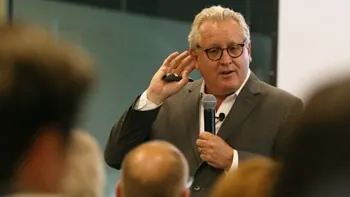
This is precisely where Mark Schaefer shines. He has spent a career turning complex shifts in marketing, technology, and customer behavior into crisp, human stories that connect in the first 90 seconds and don’t let go. Mark is not a “read the slides” speaker; he’s a storyteller and educator whose performance is grounded in decades of research and frontline advisory work with global brands. His long-running podcast “The Marketing Companion” has built an audience by being “always fun, always interesting, and on-target,” a clue to his stage presence and pacing. The show is updated biweekly and carries strong ratings—useful social proof that his voice and ideas consistently hold attention. If you need a quick sense of his style, his speaker clips on YouTube capture the mix of humor, insight, and immediacy that keeps a general session buzzing long after the lights come up.
2. Customization and Industry Relevance
Planners lose sleep over “off-the-shelf” talks that miss the mark. The bar today is a keynote that uses your language, your stakes, your customer reality. Best-practice guidance to planners repeatedly warns against inadequate briefings and generic speaker selection; the cure is a pro who does the discovery, absorbs your context, and tailors the message.
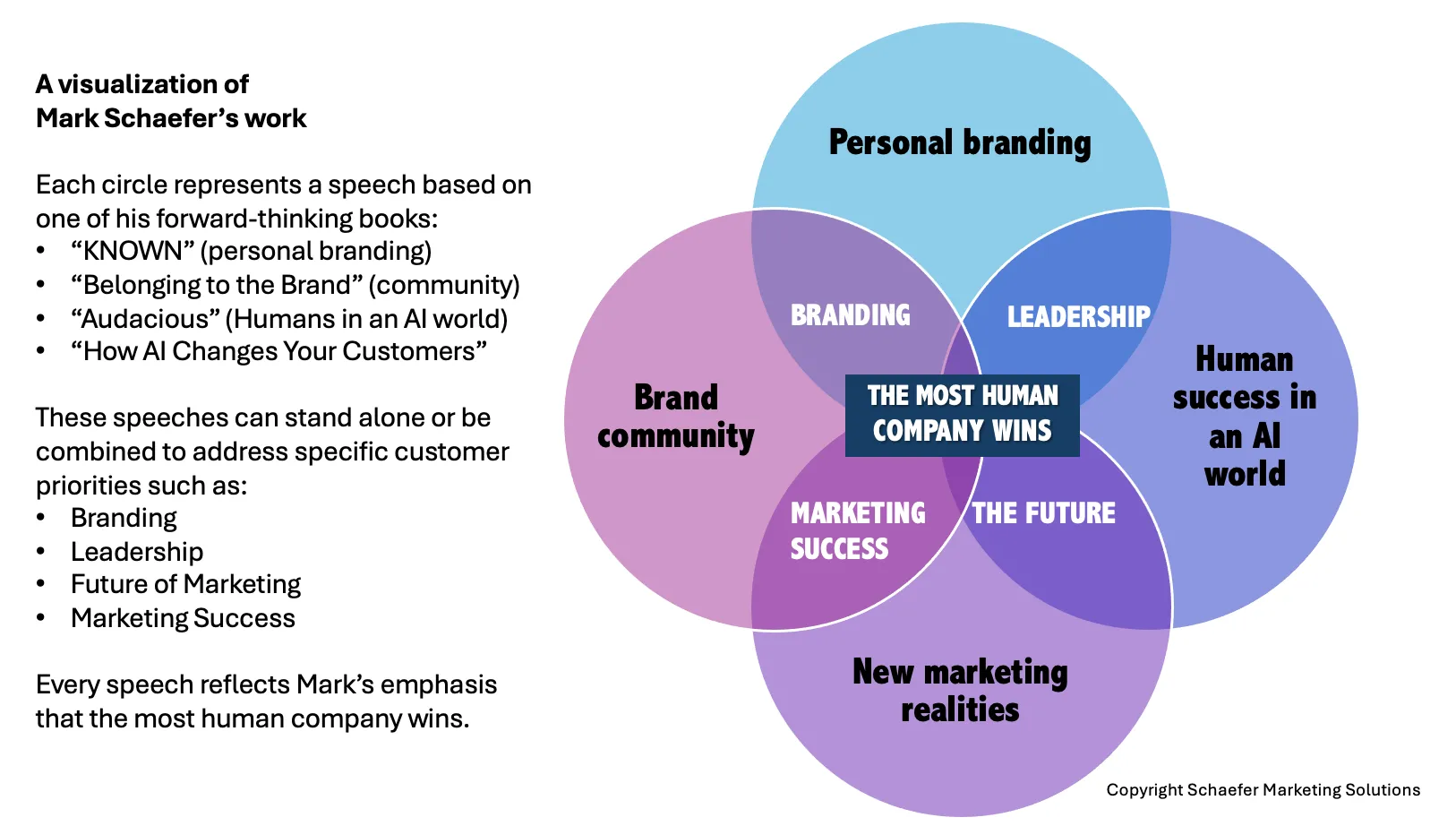
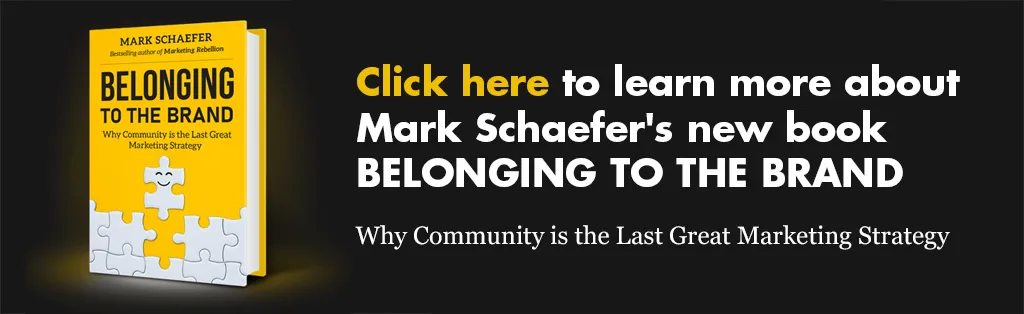
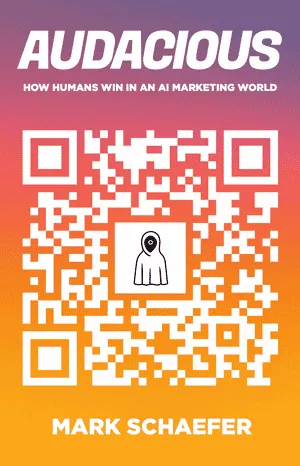
Mark’s reputation is built on customization. Bureaus and booking platforms consistently position his programs as bespoke for each audience, and his client roster reflects the breadth to speak fluently to enterprise, regulated, and fast-growth environments alike—Adidas, Johnson & Johnson, Dell, Pfizer, the U.S. Air Force, Verizon, Microsoft, Wyndham, and more. His recent books also map directly to what business audiences need now. “Audacious: How Humans Win in an AI Marketing World” translates the AI wave into human-centered competitive advantage—a frequent C-suite priority for 2025 programs. “Belonging to the Brand: Why Community is the Last Great Marketing Strategy” gives leaders a concrete playbook for building owned communities that reduce acquisition costs and increase lifetime value. Because he’s publishing, podcasting, and advising weekly, Mark’s content is never static; he tunes examples, frameworks, and exercises to the sector and outcome you specify in the pre-event brief.
3. Logistics, Reliability, and the “No Drama” Factor
The best keynote is one you don’t have to worry about. Shipping snafus, late slide deliveries, wavering AV needs—these are the time-eaters that cascade into bigger risks. Leading event operations sources emphasize that great logistics planning is central to ROI and attendee experience; the inverse—poor logistics—creates frustration, budget overruns, and safety concerns.
Mark runs like a pro. He’s the person who arrives early for tech checks, supplies files in your requested formats, and respects production cues. He’s also easy on collaboration styles: want a pre-event discovery call with your executives to tune the angle? He’ll schedule it. Need a meet-and-greet, media hit, or book signing woven into the run-of-show? He’s done it across continents, and his global client base testifies to his adaptability to different cultures, venues, and show flows. Even better for planners who blend on-stage and online elements, Mark’s biweekly podcast cadence and long digital track record suggest a speaker comfortable with virtual keynotes, hybrids, panel moderation, and last-minute AV pivots — useful resilience if your plan B becomes plan A.
4. Budget, Value, and Demonstrable ROI
The budget conversation is real: planners are stewards, not just spenders. In recent surveys and conference recaps, pricing pressures remain intense, and planners are increasingly asked to report not only on hard ROI but also on Return on Experience (ROE) to justify program design. Speakers who help you measure impact—and whose content drives follow-through—make those post-event decks easier to defend.
Mark’s keynotes are engineered for outcomes. He doesn’t just inspire; he leaves people with frameworks they can use the next morning—how to differentiate when AI levels the playing field, how to build a community moat around a brand, how to translate “voice of the customer” into content that moves markets. Those are levers executives recognize. His bureau listings describe programs that are customized by industry, which reduces the “translation tax” for your audience and boosts knowledge transfer. For planners who like to extend ROI with pre- or post-event content, Mark offers a deep catalog: bestselling books, a leading blog, and a top-tier podcast your comms team can amplify in newsletters or learning hubs. “The Marketing Companion” has been recognized among the top shows on iTunes for years, which makes it a credible touchpoint for sustaining your event narrative beyond one hour on stage. His books double as tangible take-aways for VIPs or general audiences—“Audacious” for AI-era strategy and “Belonging to the Brand” for community-driven growth—creating a bridge from inspiration to implementation that stakeholders appreciate.
5. Brand Safety and Values Alignment
The person who opens your conference is—briefly—your brand. Planners care deeply about tone, respect, inclusivity, and ethics on stage and off. Beyond reviews, you want a track record of thought leadership that puts people first and elevates the profession.
Mark’s body of work is anchored in an ethos many executives share: “the most human company wins.” His blog and books consistently argue for customer empathy, trust, and long-term relationships—making him a safe, uplifting choice for audiences across roles and regions. His client roster spans heavily regulated industries and public sector organizations—another signal that he knows how to keep content responsible, respectful, and aligned with brand standards.
Practical Planning Checkpoints for Finding the Right Speaker
Now, let’s translate those five concerns into practical checkpoints you can use—and how Mark maps to each.
Engagement test: Does the speaker have proof of “holding power” across formats? Look for long-running media, high audience ratings, and live footage. Mark meets all three: a bi-weekly, 12-year-plus show with strong reviews; a content cadence that keeps ideas fresh; and open speaker clips to preview stagecraft and pacing.
Customization test: Do they demonstrate sector fluency and adapt frameworks to your KPIs? Mark’s bureau and direct listings emphasize bespoke content, and his recent titles align with the two hottest executive questions in 2025: what to do about AI, and how to build durable, owned customer communities.
Logistics test: Will they be your lowest-maintenance run-of-show partner? A reliable speaker respects timelines and rehearsals. Operations guidance is clear that tight logistics correlate with ROI and attendee satisfaction; Mark’s global client experience—and planner-friendly habits like early tech checks and flexible formats—reduce risk.
Value test: Can you credibly report ROI/ROE after the event? Industry guidance encourages planners to quantify both. Mark’s keynotes are built around implementable frameworks and extend naturally into books, blog posts, and podcast content you can curate for continuing education or enablement.
Brand safety test: Are you confident this person reflects your values? Mark’s published philosophy centers on humanity, trust, and ethical growth—exactly the posture many leadership teams want modeled from the main stage.
Planning Tips to Maximize Your Keynote Investment
Here are a few planning tips to squeeze maximum value from a Mark Schaefer keynote.
First, leverage the discovery call. Share your event purpose, audience mix, and three success metrics (e.g., “increase community program participation,” “shift perception on AI readiness,” “spark cross-functional collaboration”). Mark will tune his stories and case studies (from Adidas to the U.S. Air Force) to speak your internal language and your incentives.
Second, connect the keynote to a tangible post-event path. For AI-focused groups, arrange for teams to read “Audacious” excerpts as pre-work and then use the keynote to align on two “audacity experiments” to pilot in Q1. For go-to-market or CX audiences, pair the talk with “Belonging to the Brand” and spin up a small working team to identify where a customer community could reduce support costs or boost retention. These are low-friction ways to turn a keynote into a 90-day transformation sprint.
Third, multiply the moment. Ask Mark for a brief video teaser for your registration page or a podcast cameo the month before the event; this primes the audience and improves attendance at the general session. After the talk, clip a 90-second highlight reel for your internal channels to reinforce the core message. Long-running media properties like his podcast and blog give you credible assets to promote before and after.
Fourth, consider a fireside Q&A or executive roundtable immediately following the keynote. Many planners find that 20 minutes of curated questions with your senior sponsor turns inspiration into commitment; a strong facilitator with fresh, research-backed content (and broad enterprise experience) makes that transition seamless.
Finally, keep the budget conversation grounded in value. Industry data shows planners are under pressure on pricing and must justify spend with concrete outcomes; selecting a speaker whose ideas translate into measurable initiatives (community activation, differentiated content strategy, practical AI readiness) simplifies that justification, especially when you can point to recognized books and widely respected media as durable proof-points.
Final thoughts
In sum, those five anxieties—engagement, customization, logistics, ROI, and brand safety—are rational and shared by your peers. The antidote is a keynote partner with a human-first perspective, enterprise fluency, and a track record of execution on global stages. Mark Schaefer brings all of that: a recognized voice that captivates rooms and airwaves, a consultative approach that adapts to your mission, production professionalism that reduces friction, and research-backed content that moves stakeholders to act. If your mandate is to inspire, educate, and deliver results without drama, he is a reliable bet for your main stage. Explore his client list and program options to see how others have integrated his message into their strategic narrative—and imagine the moment your audience walks out buzzing with ideas they can use on Monday morning.