


 You’re in marketing for one reason: Grow. Grow your company, reputation, customers, impact, profits. Grow yourself. This is a community that will help. It will stretch your mind, connect you to fascinating people, and provide some fun along the way. I am so glad you’re here. -Mark Schaefer
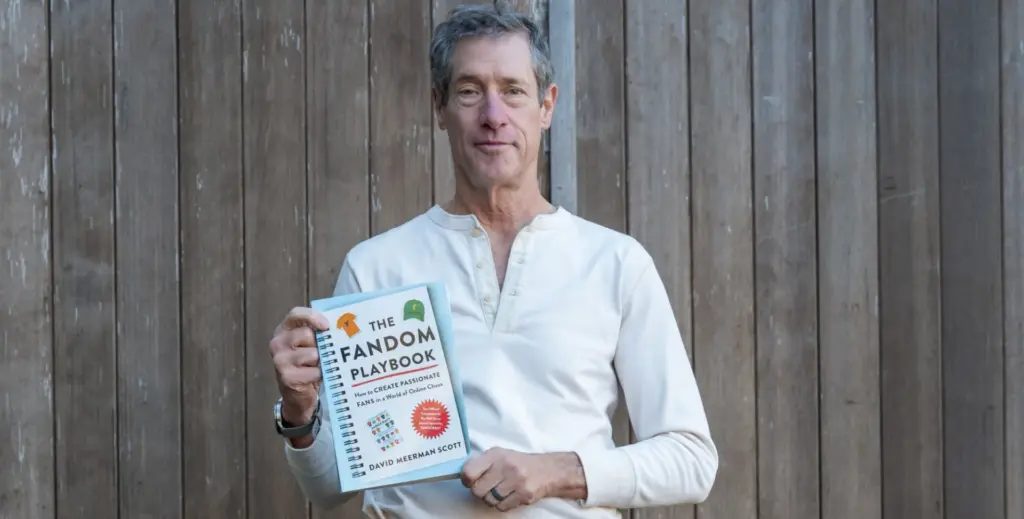
David Meerman Scott is one of the most successful business authors of our generation. He earned acclaim for The New Rules of Marketing and PR and has subsequently explored the psychology of fandom marketing in several books, including his newest effort, The Fandom Playbook.
But we live in a world that seems to be working against the idea of fandom.
- Media has fractured, turning most people into their own independent streaming channel.
- People are defaulting to AI for purchasing decisions and product discovery.
- Authors like Byron Sharp favor an approach of mass marketing over catering toloyal customers.
Is creating fans still a legitimate strategy in this environment? We’ll find out today in my interview with David Meerman Scott.
Mark: In Chapter 1, you write that fans ‘stick with you even if a lower-cost or flashier competitor emerges.’ Byron Sharp’s data across hundreds of categories (How Brands Grow) says the opposite. Loyalty mostly follows market share — most buyers are light and shop around so you need to focus on mass marketing. Is fandom a growth strategy, or the reward you get after you’ve already become established?
David: Fandom is an opposite strategy to mass marketing. When everybody is going in one direction (algorithm-driven content and AI everything), a personal connection builds fans.
I don’t see fandom as mass marketing like superficial loyalty programs or a focus on casual repeat purchase. Rather, fandom is the diehards who talk about you, bring their friends, stick with you even when you screw up.
I see fandom as both: A growth strategy and the reason people keep coming back.
Mark: Coca-Cola just made an about-face from brand love, seemingly moving toward micro behaviors and performance marketing. How do you reconcile a focus on fandom as a trend that at least some brands are abandoning?
David: According to SEC filings, The Coca-Cola Company spent over $5 billion in 2025 on advertising worldwide. Over five billion dollars. On advertising. They are paying for attention.
I see fandom as something completely different: Creating an experience that’s so great that people want to do business with you. Coke has done that for a century.
Fandom doesn’t result from a one-off paid advertising campaign. Fandom often comes for free or nearly free.
People crave belonging, ritual, and identity. Coke can punt on “brand love” all they want. But that gut-level feeling you get holding a red can at a barbecue with your friends? That’s fandom, and no algorithm-based advertising will out-optimize it over the long run.
Mark: You say Duracell’s PowerForward program ‘upends everything conventional marketing teaches about commodity products.’ But Duracell is one of the most advertised brands on earth: decades of TV, the Bunny, an end-of-aisle display at every checkout. Could a no-name battery brand pull off PowerForward?”
David: Duracell has the advantage of scale, sure. But the reason PowerForward works is showing up with batteries and relief when the lights go out after a hurricane or wildfire. That’s empathy in action, not just awareness. A no-name brand without deep pockets can still show up in powerful ways, even if it’s not hurricane-sized. Sponsor the local robotics club. Donate power packs to schools. Show up where people need power, not where there’s already a spotlight.
If you’re unknown and your only trick is “we exist,” it’s a long road. But the path isn’t closed! Fans follow brands that show up, surprise them, and act like humans. There’s always room for someone to break the script.
Mark: You have executives in the book who dismiss measurement. “You can’t measure it, but you can feel it.” This is a tough one. I understand this. It’s a fight every marketer has, but we are unlikely to change corporate ROI culture on our own. In an era where our jobs are being threatened by AI, isn’t adopting a “feel it” perspective handing the boardroom a reason to cut us?
 While I don’t have proof and haven’t done the research, my gut feel from talking to many hundreds of organizations about fandom over the past two decades suggests that a company run by MBAs will be less likely to build fans because they are so deeply focused on Wall Street-style measurement.
Boards want numbers and marketers want budgets. But we measure what’s measurable, and ignore what truly matters at our peril. Think about the Beatles, the Grateful Dead, or your favorite sports team. Or the local surf shop, dance school, or dentist. Nobody asked for weekly report on “fan vibe.” And yet, those passionate communities have delivered tremendous value.
My take: track what you can (referrals, organic content, repeat business), but also fight to keep the intangible on the agenda. When someone says, “I can feel it,” ask what signals they notice, event attendance, unprompted user content, the volume of unsolicited ‘love letters’ or social DMs. AI can count a lot, but it can’t feel a movement.
The big risk is that the boardroom outsources humanity to a dashboard and misses what makes a movement truly valuable.
Mark: I lazily like a few brands, but really don’t care for any single logo other than the Pittsburgh Steelers because they are badass and my family would disown me if I didn’t cheer for them. I prefer for brands to leave me alone. Is fandom possible for every consumer, or should we leave some consumers alone? How would I become converted to love a soft drink or a pair of shoes?
David: I don’t see fandom as a mass marketing approach.
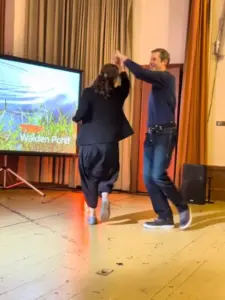 I look at fandom as an organization that totally gets me and provides an exceptional experience. You want to talk shoes? Okay, let’s do that. Two years ago, I started dancing the Lindy Hop, the original swing dance out of Harlem in the 1930s. I’m obsessed and dance about 10 hours a week, including private lessons, group lessons, and social dances.
For the first 6 months, my feet hurt. I had the wrong shoes. Then I discovered Fuego Dance Shoes and my life changed! I am a fan! I’ve bought four pairs in a year.
Some of my partners wear them too! It’s kind of a cult.
Most of us aren’t out here loving toothpaste or fast food. But fandom isn’t about mass hypnotism. We should absolutely leave the disinterested alone and spend our energy delighting, surprising, and satisfying the folks who want to join us.
Could you love a soft drink? Sure—if it showed up in key moments of your life, if it connected to a community or ritual you care about, if it felt like part of your story. But we can’t expect to convert everyone. Instead, aim for the sliver who will do your marketing for you simply because they love what you stand for. Everyone else? Let them enjoy their bandwagon. That’s fine, too.
Chapter 3 tells readers to replace AI-generated images because audiences ‘see right through them.’ In the acknowledgments, you say you wrote this book with a private AI trained on your own work. I think it is great you disclosed this. We just had the Hank Green controversy where fans turned on him when they discovered one sentence was written by AI. If fans learn the voice they love was co-written by a model, can the fandom survive? Where is the line you draw?
Fans don’t mind tools; they do mind being tricked. In my case, I wouldn’t say AI was my co-author. Rather, for me, the line is simple: Is the relationship still authentic? Am I sharing my real voice, my opinions, and my experience, even if a model is helping me organize a way to present my ideas that makes them easier to implement? That’s honest fandom.
But farm out your personality and ideas to a bot and deny it? You risk losing what makes the connection real. Use the tools. Own the process. But never pretend the magic came from a machine.
If you use AI transparently: “Hey, I had some help organizing my thoughts, but every idea and turn of phrase is still me”, you’re respecting your readers. People feel betrayed when the connection is fake, or you hide the help.
I recently wrote a post called “The Collapse of Consideration.” Research shows that consumers increasingly count on brand referrals from AI. And the most-loved brands are not being referred by AI. The best-explained brands are. Are AI agents and AI referrals a threat to fandom or an opportunity?
I see fandom as the opposite of AI-everything.
The brands that thrive will be the ones whose stories and fan energy spill outside the algorithm. Fandom is your insurance against invisibility. If your community is raving about you publicly, writing creative reviews, and keeping your spirit alive outside of AI’s recommendations, you stay relevant even as robots draw the map.
AI might get your product into the consideration set, but it’s the human moments that turn a buyer into a fan. Never give up on building connections that can’t be summed up in a single-sentence AI summary.
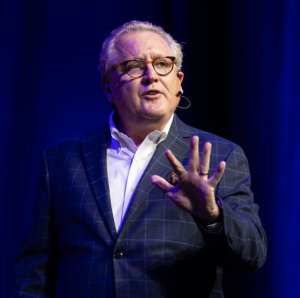 Need a keynote speaker? Mark Schaefer is the most trusted voice in marketing. Your conference guests will buzz about his insights long after your event! Mark is the author of some of the world’s bestselling marketing books, a college educator, and an advisor to many of the world’s largest brands. Contact Mark to have him bring a fun, meaningful, and memorable presentation to your company event or conference.