


 You’re in marketing for one reason: Grow. Grow your company, reputation, customers, impact, profits. Grow yourself. This is a community that will help. It will stretch your mind, connect you to fascinating people, and provide some fun along the way. I am so glad you’re here. -Mark Schaefer
Nearly every time I read a marketing newsletter or analysis, I see a reference to something old becoming new again. If you have a brand story to tell, nostalgia marketing seems to be the wave to catch these days.
It’s been a while since I wrote about the power of nostalgia in marketing, so I decided to go down the rabbit hole. I found a new twist. Nostalgia marketing is so resonant right now that even startups with no brand heritage are using 1980s and 90s iconography and aesthetics to promote their products. Does that seem bizarre?
Let’s explore this together today. This article explains:
- Why nostalgia is such an important marketing consideration right now
- The three conditions making nostalgia a sustainable trend
- How modern brands with no heritage are tapping into the positive emotion of nostalgia
- Ten ideas to use nostalgia for your own brand
- What nostalgia might mean to Gen Alpha
Nostalgia marketing is everywhere
If you pay attention to marketing trends as I do, advertising seems to be in a time warp. Throwback products and images are everywhere:
-
Fashion: Low-rise jeans, baby tees, butterfly clips, platform shoes.
-
Accessories & tech: Digital watches (vintage Casio) are being rediscovered.
-
Branding & marketing: Retro logos, reissues, limited “vault” drops from early 2000s design cues. Retro sneakers are the latest trend, as Adidas and Nike drop limited-edition versions of shoes from the 1990s.
-
Food: More than 70% of consumers are drawn to childhood-evoking treats. Brands are leaning in with retro packaging and revivals precisely because it translates to sales lift with Gen X and younger shoppers alike.
- Media: Stranger Things. Need I say more?
Let’s keep running up that hill. Today, I’ll look at why and how you might capitalize on this trend (even if you have a new company with no significant brand history).
Side note: The generation born roughly 1997-2006 (Gen Z) is drawn to “eras before their lifetime” to find aesthetic distance or escape the present. While researching this post, I learned a new word. “Anemoia” means nostalgia for a time you didn’t live through. Don’t assume nostalgia needs to be their memory.
Anything old is new again
My friends at The History Factory created an interesting piece of free research on the new momentum of nostalgia in culture and marketing. Highlights:
- Younger adults are the loudest champions; around 70% of adults aged 18–34 show an interest in heritage.
- 74% of Americans would like to see more retro throwbacks from brands.
- Limited-edition, retro products are the most appealing type of content to Americans (among 12 possible content themes).
- Marvel leads the category for brand heritage storytelling across multiple channels, ranking No. 1 on the Brand Heritage Index™ with the highest overall score of 84.
So, this trend is undeniable and growing, especially with young people. Why now?
There are three main reasons nostalgia marketing is extremely relevant right now, especially with Gen Z:
- Comfort in a period of crises
- Historic media trends aimed at children
- A search for shared experiences.
Let’s break each down in more detail.
1. Comfort food in chaotic times
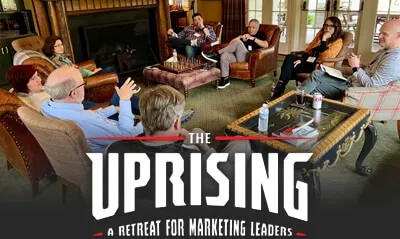
Jola Burnett, SVP of consumer research company Ipsos, attended my Uprising retreat a few times. At a recent session, she presented on the most important global trends and said:
“This generation is not living through a crisis. It is living through multiple crises. It is a time of extraordinary economic, environmental, and social strain.”
In this context, a search for “comfort food” makes sense. During periods of unusual stress, people seek emotional regulation and a sense of belonging. The American Psychological Association notes nostalgia boosts well-being, eases loneliness, and restores meaning.
In the words of Dr. Krystine Batcho, it’s “the soothing ointment that helps people manage the anxieties from conflict.”
Nostalgia is an important part of “brand therapy” to get through the blues. And, we have a LOT of blues.
2. Media trends fuel the nostalgia marketing trend
I wrote about the influence of nostalgia in 2020 and noted that the evolution of media helps explain why old is gold.
Up until the 1980s — and the advent of cable programming — there was almost no direct marketing to children. Most of the early children’s television programming, like Sesame Street or Mr. Rogers, was on PBS — no ads. And at prime time, children watched whatever network programming mom and dad had on the tube.
Cable TV introduced fully dedicated channels for youth-oriented cartoons, movies, nature programs, and educational programming. This increased exponentially with the advent of the internet and surged again with the rise of smart devices, when children could watch anything, any time, and anywhere. An entire media ecosystem was created for kids.
Starting about 30 years ago, the golden age of children’s programming and youth-oriented product marketing began. The Millennials who grew up in this era have an incredible abundance of media-driven emotional connections compared to any other generation.
If nostalgia means longing for a happy childhood place or experience, you could say that kids growing up after 1980 have been thoroughly prepped for it.
3. The search for shared experiences
There is a third reason why nostalgia connects now — a search for shared experiences.
Our fragmented media environment means we have fewer common references than we did in the past. Everybody curates their own media experiences alone, through their earbuds.
You can’t have nostalgia without a shared past to return to — and you can’t have commonly understood jokes without a shared understanding, or even, in the truest sense, a shared language. The appeal of nostalgia is that it allows storytellers to set their adventures in the last period where we really did have that shared understanding — before the smartphone shattered our world in more ways than one.
What if you don’t have a nostalgic story?
There are many newer brands and startups that look like they dropped from a time machine. Look beyond your own timeline. Some nostalgia opportunities don’t come from your brand history—they’re cultural overlays you can tap:
- 80s arcade-style visual design
- Early internet aesthetics (pixel fonts, loading bars, Windows 98 UI)
- 90s mall culture
- Y2K chrome gradients and flip-phone culture
- Analog textures and filters (film grain, VHS distortion, cassette labeling)
- A brand pop-up shop that replicates a 1990s bedroom
- A “throwback menu” or “throwback website” for one day
Olipop is an example of a startup connecting to classic flavors and retro design elements:

My grandmother always kept a stash of Cream Soda for me, so I’m all in on Olipop!
Take a look at Vacation Sunscreen. The fast-rising brand created a 1980s world to establish the emotional connection to its product:
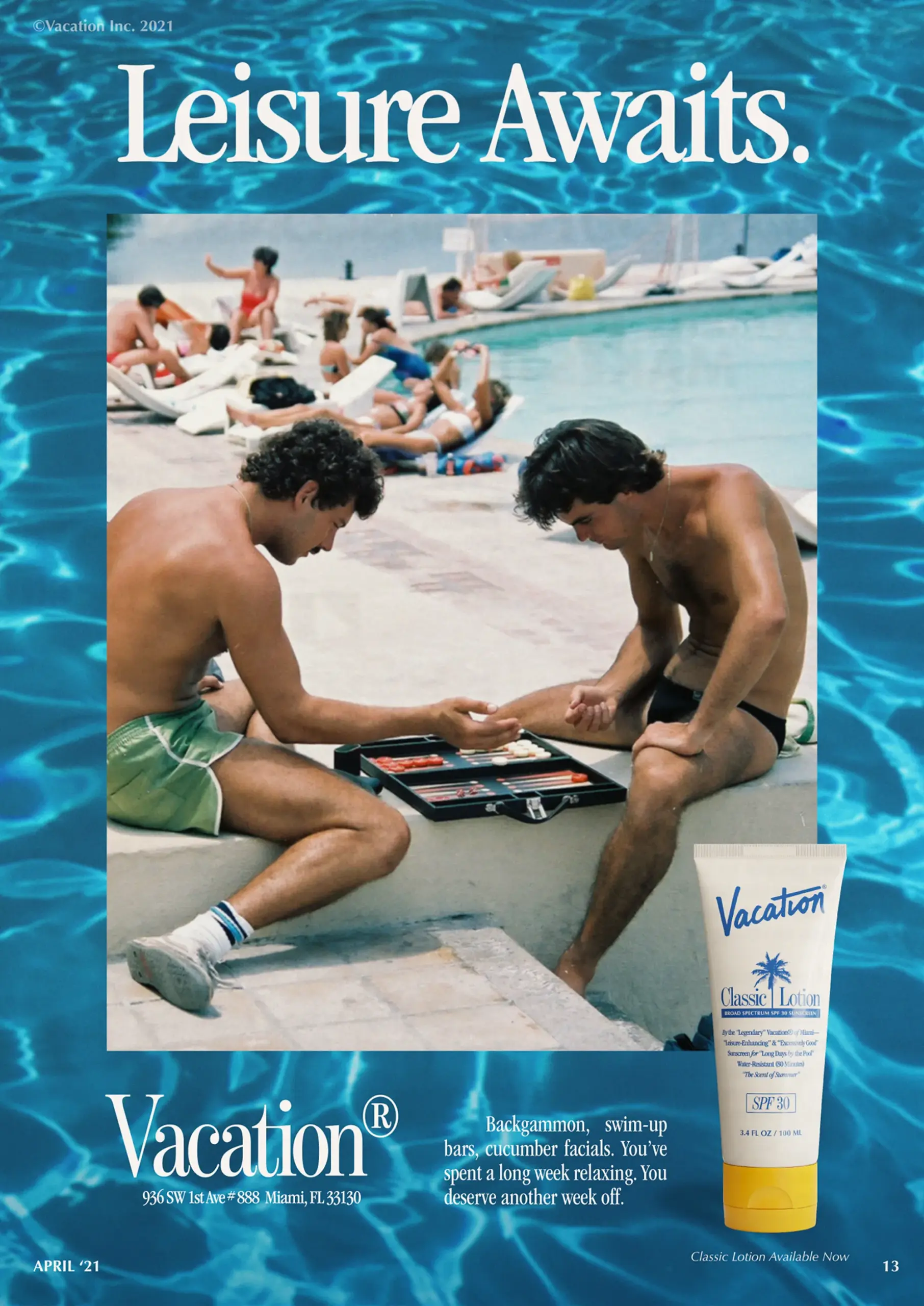
Vacation sun lotion even comes with its own “radio station” that plays oldie hits and commercials from the 1980s:

Cereal start-up Magic Spoon has a design that echoes 1980s/90s cereal boxes: mascots, bright gradients, Saturday-morning energy, but with keto macros and adult-friendly nutritional claims.

Many tech companies are adopting a lo-fi, pixelated look reminiscent of early video games. This is from the Nothing Electronics website:

I have suits older than the Graduate Hotel chain, yet when you step inside, it feels like you’re in the 1960s.
Their hyper-stylized retro design borrows from cultural memory, not their own brand history.
-
Kitschy vintage colors straight out of a 1960s yearbook
-
Plaid patterns, rotary phones, wood paneling, chandeliers, and campy memorabilia
-
Guest rooms styled like nostalgic dorm rooms (complete with old-school desk lamps, varsity motifs, and needlepoint art)
-
Public spaces that look like mid-century student unions or 1970s rec rooms
-
Restaurant and bar concepts that feel like throwback diners, supper clubs, or old campus hangouts

I never look back fondly at my great memories at the good ol’ Walmart. It doesn’t seem ripe for nostalgia marketing. But this video is one of my all-time favorite examples of nostalgic emotions in an unlikely place. A genius commercial that became a viral guessing game:
So, you don’t need to be an old-timey brand to create a nostalgic feeling. Sometimes nostalgia is most powerful as an experience, not a product.
10 Ideas to create your own heritage moat
I don’t think I’m going out on a limb by saying the number of crises in the world won’t diminish any time soon (Hey, AI, I’m looking at you!).
Does your brand have a heritage moat, a story that connects people to a comforting memory? Here are some ideas to put this to use for your brand:
- Audit your “dormant assets.” Most heritage sits under-leveraged inside a company: old packaging, jingles, slogans, characters, mascots, stores, uniforms, product variants, and past brand partnerships.
- Explore what your customers are already nostalgic for. Gen Z and Millennials constantly create nostalgia timelines on TikTok and Instagram. Search for people already celebrating a past version of your brand through remixed commercials, vintage packaging collections, and fan communities sharing memories.
- Celebrate anniversary milestones. An obvious opportunity is taking customers on a trip down memory lane in association with a brand’s birthday. Let’s be honest … nobody cares about the anniversary except your company. But it’s an opportunity to bring back milestone memories that elicit positive emotions with your customers.
- Don’t be gimmicky. Nostalgia trends are emotional triggers. They work because they connect — so whatever you borrow, ensure the narrative is meaningful and not just surface-deep. Nostalgia marketing can backfire if it feels fake, irrelevant, or neglects how times have changed.
- Connect it to now. Gen Z cares about authenticity and values, not just the aesthetic. So when leveraging nostalgia, tie it to something relevant (inclusion, sustainability, community).
- Bring back “lost rituals.” Many industries have rituals that quietly disappeared. Brands can resurrect these rituals digitally or physically. Examples: Burning CDs, Family game night, popping popcorn, the mall photo strip booth.
- Engage the senses. Nostalgia is multisensory. It can be evoked by sounds, sights, smells, touch, and tastes.
- Recycle past products. The Coca-Cola Company restocked shelves with a blast from the past—Hi-C Ecto Cooler. Ecto Cooler was first introduced in partnership with the original Ghostbusters movie in 1987, and a movie reboot gave Coca-Cola the opportunity to revive its popular discontinued product.
- Resurrect old icons. Kentucky Fried Chicken (KFC) hired a series of actors to portray its founder Colonel Harland Sanders since 2015. While actors like Jim Gaffigan and Rob Lowe don the founder’s iconic white coat from time to time, nobody says it quite like the Colonel himself. KFC’s more recent television spots splice together old film of Colonel Sanders or portray him in a modern context.
- Explore emotional moments. Every brand has a moment where customers fell in love for the first time: “The cereal box toy I kept forever.”
“The first time I tried a video game.”
“The shoe I wore during a milestone moment in my teens.”
“The logo that was on my high school backpack.”
- Identify and map those “first-love” moments. Those are the memories you want to activate.
The nostalgia of the future
I had this thought … what will be nostalgic 20 years from now for Gen Alpha (born 2010-2024)? Is it possible to create nostalgia-worthy brand characters, rituals, and cultural touchpoints today as part of a long-term brand strategy? Are there cultural patterns that seem destined to be beloved and memorable, or is it more random?
Maybe the nostalgia of the future will revolve around TikTok jokes and memes?

Have not really heard of anybody mindfully building nostalgia into a product for the next generation. If anybody is working on a nostalgia-forward strategy, drop me a line. It would be fun to hear about that.
In any event, the power of nostalgia soothes a whacked-out world, and it’s probably an idea to consider, even if you don’t have a historical brand story to tell.
 Need an inspiring keynote speaker? Mark Schaefer is the most trusted voice in marketing. Your conference guests will buzz about his insights long after your event! Mark is the author of some of the world’s bestselling marketing books, a college educator, and an advisor to many of the world’s largest brands. Contact Mark to have him bring a fun, meaningful, and memorable presentation to your company event or conference.