

 You’re in marketing for one reason: Grow. Grow your company, reputation, customers, impact, profits. Grow yourself. This is a community that will help. It will stretch your mind, connect you to fascinating people, and provide some fun along the way. I am so glad you’re here. -Mark Schaefer
I am beginning to think of myself as the human wake-up call.
I’m fortunate to meet with amazing marketers around the world, and I find that too many of them are living in the past. They set a social media strategy and then execute the same plan for years without looking up to see how the world works today.
So, I start clanging around trying to wake them up.
One of the biggest wake-up calls has to be for social media marketing. The fundamental premise is broken. And the brands still operating in the past aren’t just leaving opportunity on the table, they’re building irrelevance at scale.
Social media is not just a distribution channel for your podcast or YouTube videos. It is the operating system for a modern brand. Let’s do a deep dive on this today.
The brands pulling ahead right now have made five fundamental shifts in how they approach social. Not tactical tweaks.
Today I’ll cover:
- The central role of social media in culture
- Connecting brand messages to values
- An experimental approach
- Onboarding to the community
- Measurement
1. Connect to the culture
Most brands still approach social as if it were a publishing calendar. We have things to say. We will say them on a schedule. We will boost the ones that perform.
But culture doesn’t care about your schedule.
The shift is from broadcasting to tuning in to culture, to community, to what your audience is already talking about. Your community is telling you exactly what they want to engage with. The question is whether you’re listening or just waiting for your turn to talk.
This is a harder shift than it sounds. It requires giving up the illusion of control that a content calendar provides. It requires trusting that participation in real conversations is more valuable than polished proclamations. And it requires speed of execution.
Social-first brands aren’t just responding to culture, they’re creating it. They’re the emcee at the party.
2. Visible values
You can’t fill a social feed with product content without sounding like an advertiser. Nobody follows an advertiser.
The brands that win on social have what you might call vocal values — a clear point of view on the world that extends beyond what they sell. Consumers, especially younger ones, increasingly want to buy from brands that share their values. But values only count if they’re visible.
This creates a different kind of content challenge. Not “what should we post about our product?” but “what does our brand actually believe, and are we willing to say it out loud?”
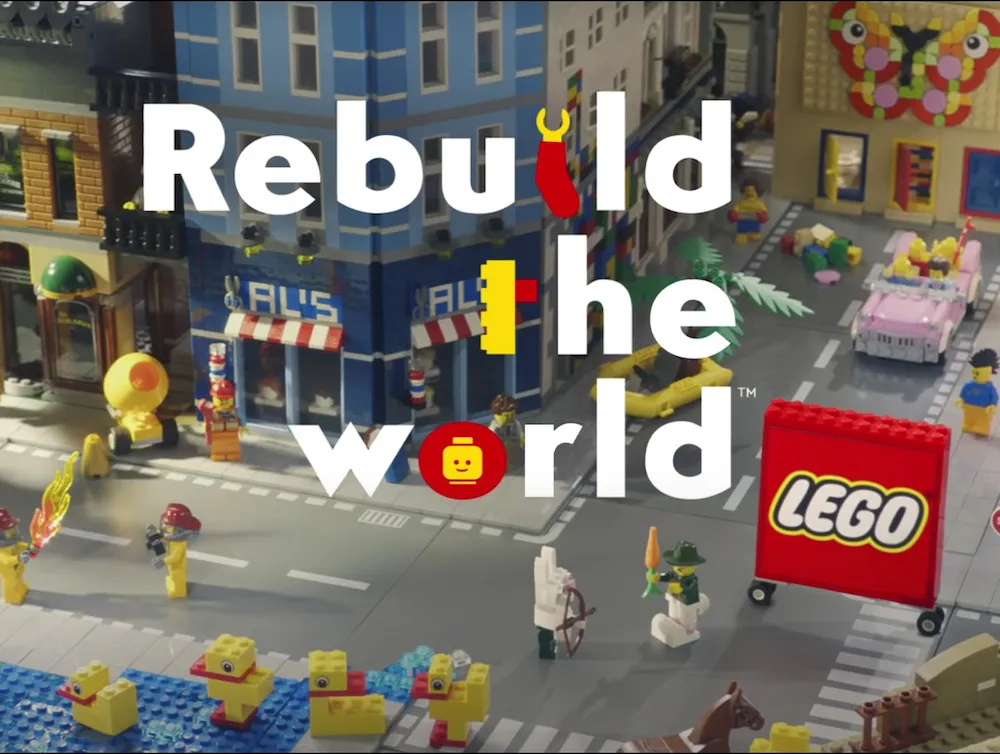
Warning: I’m not saying you need to be political or divisive. That can be a hazardous strategy. Brand values can be positive and uplifting. For example, LEGO stands for wholesome, positive, creativity.
3. Decentralized and experimental
This is where organizational culture either enables or kills your social strategy.
The old model: every post has multiple approval layers, legal signs off before anything goes live, and brand guidelines are applied like brand armor — everything perfectly coordinated, perfectly safe, and perfectly forgettable.
The new model is decentralized and experimental:
- An agile social team that is empowered and trusted, with a direct line to the CMO
- Social managers are natives in the brand community
- The legal relationship is built on trust rather than friction.
- A bias toward trying things rather than perfecting them.
Today’s winning brands are elastic, moving when the moment arrives rather than when the approval chain completes.
A great example of this is the Duolingo owl, a brand mascot that has created social media mayhem for 15 years. The owl is not just responding to culture. The social media team is making its own. The owl is starring in his own anime series.

The phrase “just try it” sounds scary to many traditional brands. They’ve spent millions over decades to build trust and protect their images. They’re not going to risk over an experiment. How will they overcome that legacy? They probably can’t.
4. Onboarding for the community
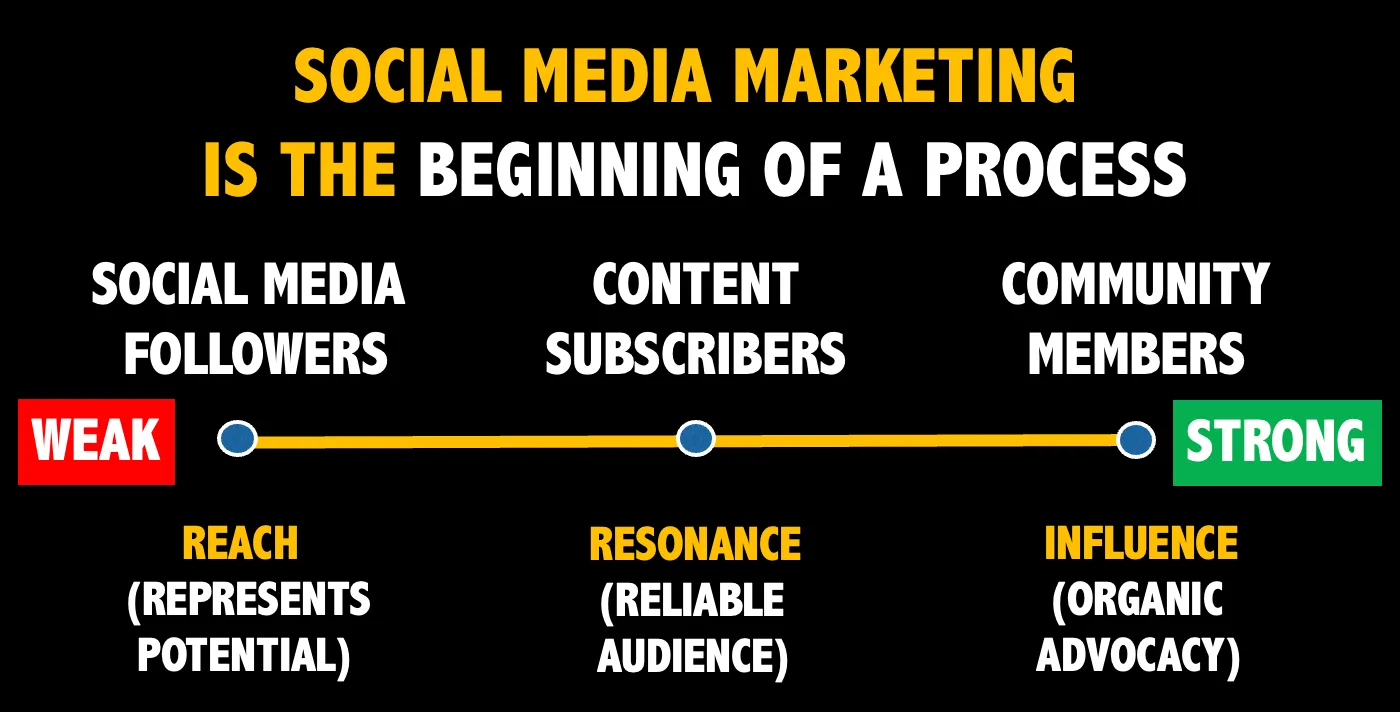
I wrote a few years ago that social media is no longer a strategy — it’s the beginning of a process.
My thinking goes like this. A brand strategy means creating an emotional expectation between your products and your customers. The best way to do that is to use social media to drive customers to your content and hope they subscribe.
When people opt-in to your content, in a virtual way, they’re saying, “I like you. Tell me more.” It’s a higher level of emotional connection. Now you have an audience. Fantastic!
But most organizations stop there. They don’t take it to the next level: community. In a community, you can realize the highest level of emotional connection and create an experience where customers literally feel they belong to the brand.
This is a great opportunity — most businesses overlook the role of social media leading to brand community.
5. Measurement: The hardest shift
This is where the conversation gets uncomfortable. Especially for me.
 I’m a measurement junkie but the science lags the current physics of business growth. The tools we have don’t adequately capture how trust accumulates, how cultural relevance translates into purchase intent months later, and how organic social builds the conditions that enable paid social to perform.
The dominant measurement philosophy — everything must trace to revenue, every dollar must be accountable — made sense 20 years ago. Marketing needed discipline. But this mindset has calcified into something that prevents a relevant strategy. When every social investment must prove direct revenue, you will systematically underinvest in the things that build brands over time.
You can be part of the culture, or you can measure. You probably can’t do both.
I’m not suggesting blind faith. We need to consider evidence-based trust. Organic social builds trust, engagement amplifies trust, paid social scales reach, campaigns scale relevance, and all of it fuels traffic to retail. Sales prove the trust. Reviews reinforce it. It’s a flywheel, and you can’t optimize one part of it while ignoring the rest.
The Underlying Problem
Strip away the frameworks, and what we’re really looking at is an identity crisis that most brands haven’t resolved: Are we a company that uses social media to advertise? Or are we a brand that participates in culture?
This new reality requires completely different organizational structures, talent, success metrics, and relationships among marketing, legal, and the C-suite.
The reframe is simple enough to put it this way: social is the operating system, not the megaphone. But simple doesn’t mean easy. Making it real requires organizational courage — the willingness to trust your team, loosen the approval chains, invest in brand-building that doesn’t trace back to a conversion pixel.
That’s the reckoning. Most brands will read something like this, nod along, and go back to their content calendar.
The ones who act on it will author the next great social media case studies.
 Need a keynote speaker? Mark Schaefer is the most trusted voice in marketing. Your conference guests will buzz about his insights long after your event! Mark is the author of some of the world’s bestselling marketing books, a college educator, and an advisor to many of the world’s largest brands. Contact Mark to have him bring a fun, meaningful, and memorable presentation to your company event or conference.