

 You’re in marketing for one reason: Grow. Grow your company, reputation, customers, impact, profits. Grow yourself. This is a community that will help. It will stretch your mind, connect you to fascinating people, and provide some fun along the way. I am so glad you’re here. -Mark Schaefer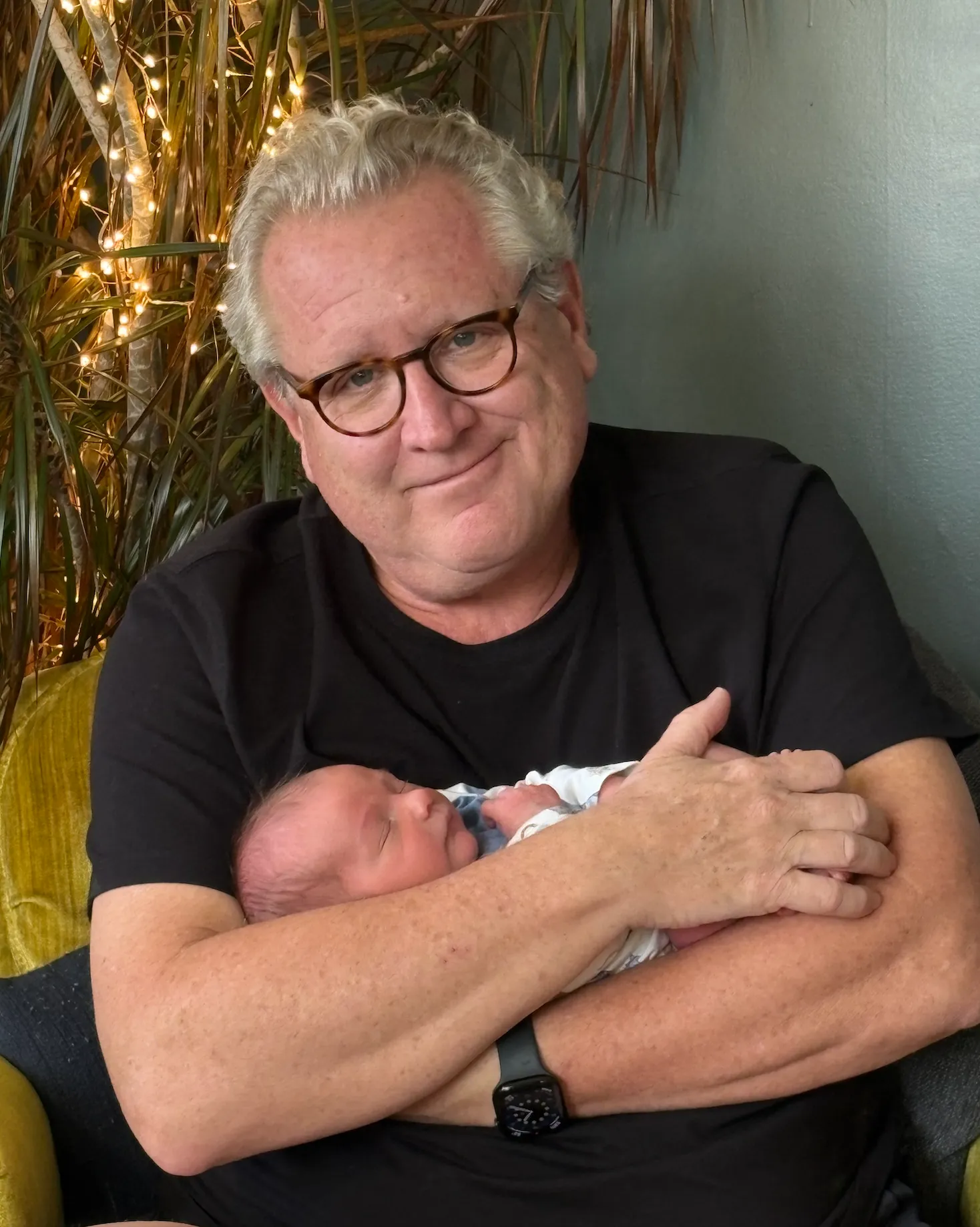
I recently became a grandfather. My grandson is a year old now — beautiful, smart, and strong (obviously!). I am mesmerized by how he meets the world with all his senses. Every blade of grass. Every beam of light. Pure, unguarded wonder.
I can’t help but look at him with immense pride and joy. But if I’m honest, there is fear sitting right next to the joy. A quiet, persistent fear about the kind of world ahead of him. An unknown, AI-dominant world.
So I’ve thought a lot about this — what it means to raise a child (or grandchild) — in a world filled with malignant uncertainty and unsettling change. How is parenting different now? What kind of world can we expect? And how do we prepare the people we love most for what’s coming next?
Let’s start at a very high level and dive down to baby level — what parents should know about AI.
Navigating the Poly Crisis
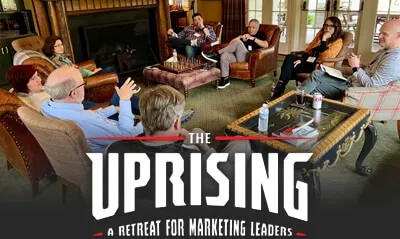
My friend Jola Burnett of Ipsos presented at The Uprising retreat last year and described our age as one of “poly crisis.” It is unique in that we’re surrounded by concern on all fronts. Environmental, political corruption, economic, and now this AI thing lurking in the shadows.
Perhaps this is small comfort, but we can recognize that the world has always been a shit show.
Who would have wanted to live in the Middle Ages? The World Wars? Through slavery, or the American Civil War, or Covid? Every generation has looked at the horizon and seen something that felt unsurvivable.
And yet. Here we are.
Humans found a way through. Overall, the world is becoming safer, healthier, and more prosperous, despite the parade of shit shows throughout history.
Humans don’t just endure hard times — we build institutions, laws, and social norms specifically designed to prevent the worst from happening again. That’s not naive optimism. That’s the solid truth of human history.
Whatever happens next, it’s just another opportunity for a resilient human race to conquer chaos.
Opposing the non-human world
We live in a deeply polarized and angry world. But here is one thing (mercifully!) we can all agree on — nobody wants to live in a non-human world.
Human beings want safety. We would like to have meaningful work. We want to have agency and the freedom to choose. And we don’t like to be bossed around.
If we reach a point where our livelihoods and families are threatened by AI, progress will certainly come to a screeching halt. Whether through legislation or resistance, we will not tolerate a non-human world. Human self-interest is a guardrail against AI dystopia.
A survey of 2,400 knowledge workers found that 44% of Gen Z employees admit to actively undermining or sabotaging their company’s AI strategies.
This isn’t dysfunction. It’s democracy working at the ground level.
This is people saying: not like this.
Watch the news for the signs. The direction of AI is now radically unpopular. The revolution, my friends, is already beginning.
The messy middle
AI will transform our lives for the better. I genuinely believe that. But we will have to earn it. We’ll have to walk through the messy middle first.
The Industrial Revolution offers us an example. It wasn’t just about job disruption, though that was real and brutal. There were many other negative outcomes through this cataclysmic economic transformation.
Foremost was pollution. In my hometown of Pittsburgh, PA, the smoke from steelmaking operations was so thick that streetlights would come on midday.

And the mills were unsafe. The city had a “death calendar” during the early 1900s tracking the daily fatalities from industrial accidents. The Industrial Revolution enabled an incredible concentration of wealth (the robber barons) built on the backs of workers who risked their lives to build the country. And there was rampant political corruption.
But these were transitional setbacks that ultimately led to a better future. We cleaned up much of the pollution, created laws about working conditions, benefited from higher wages, and so on.
The AI Era will have its own messy middle. Career insecurity. Environmental costs. Misinformation. Algorithmic bias. Surveillance creeping into corners of life we haven’t yet thought to protect.
These are real. I am not asking anyone to minimize them. I am asking us to hold them alongside something else: the possibility that we are moving toward a world in which AI delivers medical, environmental, and economic miracles for society.
By the time my grandson is ready for college or is entering the workforce, I think we’ll be through the messy middle and live in a dramatically different and better world. He will take for granted that we have abundant free energy, longer lifespans, and unimaginable new work opportunities untethered from a desk, a wrench, or a computer screen.
Our fear is not their fear
As I thought through what I wanted to say in this post, I realized that I’ve been projecting my fear onto a one-year-old who has no idea any of this is happening.
AI has turned my professional world into a daily negotiation with irrelevance. The skills I spent decades building are now, in some form, available to anyone with a prompt. That’s disorienting, and it seems unfair.
My fear is about losing the status quo that I built my identity around. Reliable truth. Professional value. The sense that what I know matters. I grew up in a world that rewarded intelligence. Now, intelligence is a commodity.
But here’s the thing I keep coming back to: that fear is mine. It belongs to my generation, my context, my particular moment in history.
Our children are walking into a different story entirely. They’re not losing something. They are inheriting a new normal, and they’ll adapt to it the way every generation adapts — with a natural fearlessness that will astonish us.
We cannot protect them from their own new, unique anxieties. But we can refuse to hand them ours.
Let’s show them the world of hope that is ahead.
Easing into the future
While we watch the new world reveal itself, there are some things parents (and grandparents) can do to help our children navigate this future.
Curiosity
As I researched my book How AI Changes Your Customers (which many have told me is a parenting book!), one thing became clear: The future belongs to the curious.
If you’re curious, AI will feed you and educate you.
If you’re not curious and just want to get the answer and move on, you will wither.
So, encouraging curiosity is an important life skill. Maybe, the most important.
Comfort with ambiguity
The messy middle I described isn’t just economic — it’s psychological. While my baby grandson has time to ease into a new normal, teens who crave certainty will struggle. The skill of tolerating “I don’t know yet” while still moving forward is increasingly valuable.
When I watch my grandson play, he doesn’t need to understand something to engage with it. Eventually, AI will surround us like the air that we breathe. But in the messy middle, tolerance for ambiguity will be a plus.
Basic human skills
Perhaps I should write an entire post about this, but I am seeing research and personal evidence that young people addicted to screens for companionship are not developing basic human skills.
Empathy, storytelling, ethical judgment, the ability to read a room. These aren’t consolation prizes for people who can’t code. They’re what AI can’t replicate and what leadership increasingly requires.
These are also the skills being eroded by screen addiction and a preference for non-human relationships.
Will our children need “AI skills”? Probably not in the way we imagine. I can already do nearly anything with AI just by talking to it. It will be even more intuitive for our kids. What they will need is the ability to be human in a room full of humans. That will always matter.
Make tech part of the parenting process
Technology is an important part of life, and it needs to be an important part of the parenting process.
A view from my friend Anna Bravington:
“My son is a gamer. He’s grown up with Roblox and Minecraft, and I made a conscious decision to learn those platforms myself. I play Roblox with him. We use Minecraft Java Edition, download mods, install them, and explore it together. I wanted to understand not just what he was doing, but how these platforms work, where the risks are, and what opportunities they offer.”
If you are alongside your child as they learn about technology, you can help guide them into the world of AI in a healthy and balanced way.
The courage to be known
In a world where AI can generate anything, the people who build real relationships and a genuine reputation will have compounding advantages. Teach kids to show up as themselves, not to hide behind a screen.
Encourage your child to create and publish. I know that sets off some alarms, but the person who is “known” in their chosen industry will always have more doors open in a competitive world.
A human personal brand is our last, best defense against AI. Authenticity still sells. Real still matters. Eventually, we will need to talk to a person to navigate our world.
Grit and determination
I’m sure you’ve seen lists of jobs likely to be replaced by AI: legal, marketing, copywriting, etc.
I know it sounds trite … and I am anti-trite … but I do believe you should follow your dream, even in the face of troubling news.
If you are deeply and sincerely passionate about a career choice, go for it, but be prepared to sacrifice. To compete against AI, you’ll have to be extraordinary, and that costs something.
Side note: Law school graduates hit a record level this year. I see that as a sign that people are doubling down on a dream.
Community
For most of my life, I was a lone ranger — head down, self-sufficient, convinced I could figure it out alone. I was wrong about that. The AI Era, with all its isolation and disruption, is not a problem to be solved in isolation. I’m in the RISE community of forward-thinking marketers, and it has made all the difference.
My daughter and son-in-law have already figured out what took me decades. They are love magnets — always surrounded by people, always building something with friends. My grandson will grow up inside that. He will know, every day, that he is not alone.
That is not a small inheritance. In a world this uncertain, it may be the most important survival skill.
A world of awe
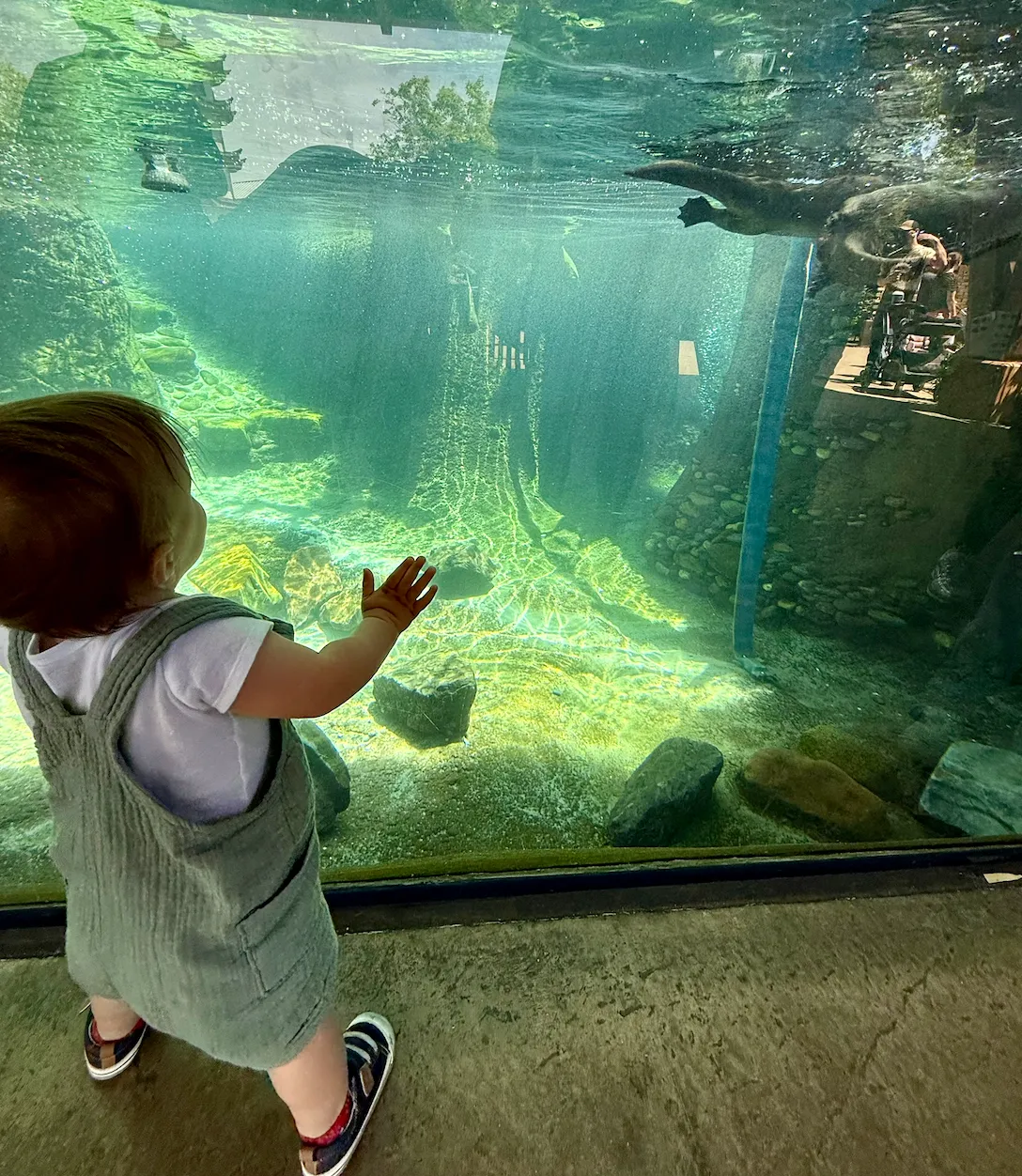
As I said, my grandson is one now. Every single movement is an exploration for him. Every leaf, stone, and stick is a new experience. Picking up a flower is a revelation. Just wait until he discovers stars!
We have a choice, every single day. We can tune into the painful world like a police scanner, absorbing the steady frequency of crisis and threat and crime. Or we can tune into it the way this boy does — as a place overflowing with miracles, where every bird and bug is a joy to behold.
The boy will be OK. And maybe I will be OK too … if I can just be more like him.
 Need a keynote speaker? Mark Schaefer is the most trusted voice in marketing. Your conference guests will buzz about his insights long after your event! Mark is the author of some of the world’s bestselling marketing books, a college educator, and an advisor to many of the world’s largest brands. Contact Mark to have him bring a fun, meaningful, and memorable presentation to your company event or conference.