

 You’re in marketing for one reason: Grow. Grow your company, reputation, customers, impact, profits. Grow yourself. This is a community that will help. It will stretch your mind, connect you to fascinating people, and provide some fun along the way. I am so glad you’re here. -Mark Schaefer
The most fun thing about blogging is reading your comments. I love hearing what you have to say and the different perspectives from around the world.
Today I want to continue a conversation … and admit that I was wrong.
Last week I published a post called The Collapse of Consideration. The central argument was this:
AI is collapsing “consideration,” the traditional stage when customers compare alternatives. AI Overviews can reduce click-through rates by about 60 percent while sending a disproportionate share of the remaining clicks to named brands.
AI visibility favors the best-explained brand, not necessarily the best-marketed one. And nearly a quarter of consumers now say they trust AI recommendations more than recommendations from friends and family.
This means marketers have a new customer to persuade. The machine. It’s a little like selling diapers. The baby uses the product, but a parent decides.
Many readers responded with a comforting conclusion: “At least trust still wins.”
I would love to agree. Unfortunately, this is not completely true.
Before you gather the pitchforks and brand me as a marketing heretic, give me five more minutes …
Here’s my mistake
I said that I needed to come clean about a mistake. Let’s get that out of the way.
In my book How AI Changes Your Customers, I dissected the psychology of AI — how humans are being rewired in real time. And then I forecast how each trend would impact marketers.
One of the most consequential shifts in the book is cognitive offloading.
Thinking is work. Comparing products is work. Reading reviews, studying specifications, and deciding whether the deluxe model is worth another $47 is work.
If AI consistently gives us a reliable answer, many people will happily surrender that work. “Just tell me what to buy.”
My prediction was that if consumers don’t want to think, they’ll default to the brands AI recommends, which I assumed would be the most trusted legacy brands built over decades. Why would AI risk a referral to an unproven brand? Trust wins.
I was wrong.
That is not what’s happening. My prediction might be true someday, but for now, AI is NOT recommending brands based on trust.
Here’s the most compelling example …
The deodorant that never was
This case study has haunted me for two weeks.
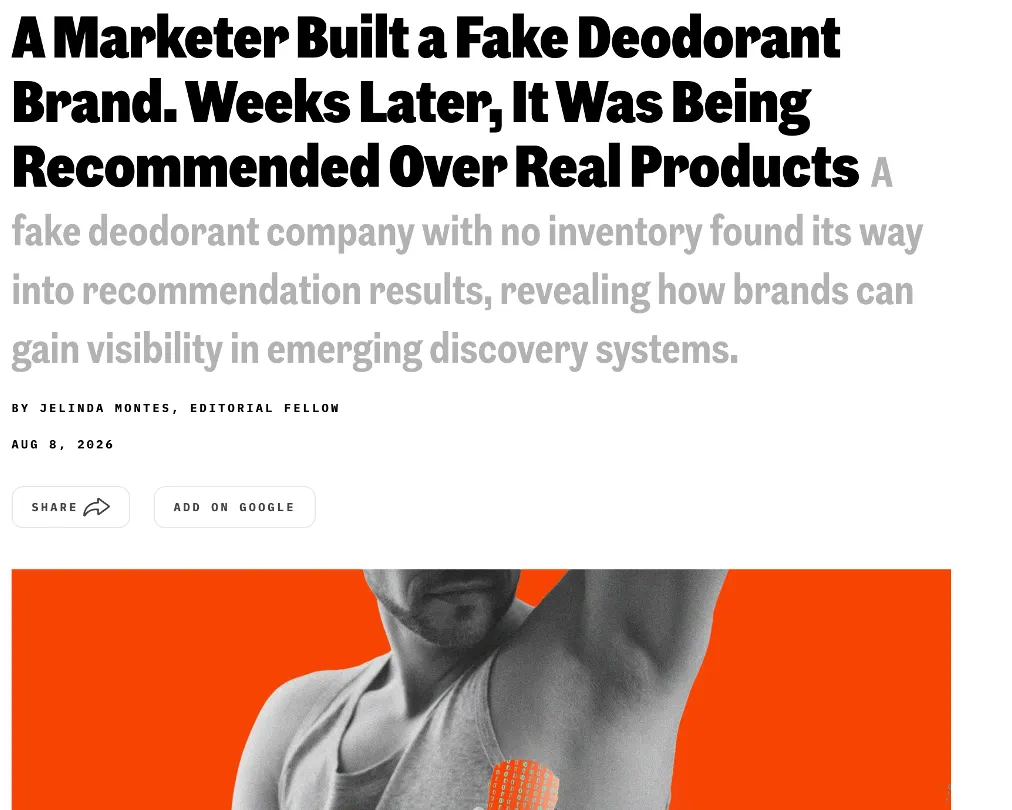
As reported in INC, just three weeks after creating a website for a fake natural deodorant brand, LLMs like ChatGPT recommended buying a nonexistent product — sometimes even ahead of proven, major brands.
“All it took was a cheap domain, a scrappy site with three pages of copy, and a slop Substack article to get there,” author Jelinda Montes wrote. “I didn’t spam Reddit, I didn’t do a bunch of fake UGC videos. I just spent a few bucks on tokens to see what would happen.”
Much of the fake brand’s website copy was AI-generated. “I threw in a few key terms like colloidal oatmeal and magnesium hydroxide, mostly to see if I could capture a long-tail result (short answer: yes, I could). Plus, one insane and incomprehensible hero graphic that ChatGPT created and I didn’t have the energy to fix.”
Of course this is just one data point. And you might guess that the big brands will eventually catch on to the AI game and regain their thrones.
But that’s not happening either.
In a Princeton-led study, the lowest-ranked brands gained the most visibility from AI-friendly tactics like adding citations, quotes, and statistics (115% gain), while the top-ranked brands lost visibility when they did the same thing.
Why? That’s part of the AI Mystery Machine.
We don’t fully understand why these systems elevate one source and ignore another. But the emerging lesson is disturbing: AI does not necessarily reward the best-known with the longest history, the largest advertising budget, or the greatest reservoir of public trust.
It rewards the brand it can understand.
The best-marketed brand and the best-explained brand are no longer necessarily the same company.
Sometimes the best-explained brand does not even exist, let alone earn our trust.
Hold on one darn minute
If you lead a traditional brand, this probably sounds alarming.
If you lead a disruptive brand, you may have stopped reading to go register Nonexistent Deodorant LLC.
But let’s pause for a reality check: AI isn’t everything.
People are not spreadsheets with shoes. We have memories, loyalties, habits, communities, aspirations, and feelings. Sometimes we ask AI what to buy. But much of the time we already know, based on what we love, what we feel.
While you’re trying to appease a boss insisting that you must be AI-forward by Friday, don’t forget that good old marketing still works.
There are four powerful ways human emotion can override an AI recommendation:
1. Branding
If you love a brand, AI doesn’t matter. If you love the Nike, you want the Nike. If you want to get married in your dream location, feelings overrule algorithms. If Oreos remind you of coming home to mom after school, then you’re going to twist, lick and dunk.
In the AI Era, branding is more important than ever. The emotion overwhelms the algorithm.
2. Word-of-mouth marketing
I needed a new suitcase. Two years ago, a road warrior friend recommended a brand through a social media post as being the best on the planet. I reached out and asked him to remind me of the product. I bought it.
No branded content.
No coupon.
No algorithm.
No re-targeting.
I trusted my friend.
That recommendation stayed in my mind for two years because it came from someone with experience and no obvious motive to sell me anything. This is the enduring power of word of mouth.
Create an experience so great that customers feel compelled to carry the story to someone else.
By the way, I’m placing influencers in this category, too. Psychologically, they’re not celebrities; they’re trusted friends.
Even though a new SAP study shows that almost a quarter of respondents said they are more likely to follow AI recommendations over advice from friends and family, I’m still betting on human word of mouth to win in the long term.
3. Brand communities
This is probably the most overlooked opportunity in marketing history.
A real community creates something an algorithm cannot hand you: belonging.
Members don’t simply consume content from the brand. They recognize one another. Help one another. Develop rituals, language, memories, and friendships. The goodwill of that relationship transfers to the company and your products.
A customer may switch products because an AI system identified a better price or an improved feature.
Leaving a community is harder.
Brand communities are still a marketing side project but deliver the ultimate customer loyalty and advocacy. And it’s completely AI-proofed. Many of the best brands are moving in this direction and maybe you should too. You can read more about this here.
4. Advertising
Let’s not forget what brought us to the dance. Brands have been built on advertising for more than a century.
Advertising remains essential, especially when introducing a new product, creating awareness, or attaching emotion to an unfamiliar name.
Do I buy things because of advertising?
Of course.
If I can trust the brand.
This is what I missed
Every one of these AI overrides depends on trust. There is still a mandate to make people feel and care.
This is the distinction I missed in my prediction: Two trust systems are operating at once.
- The human marketing system rewards reputation, experience, emotion, relationships, and belonging.
- The AI system rewards clarity, structure, evidence, relevance, and explainability.
A strong brand needs both. You must be trusted by people. And understood by machines.
The fake deodorant brand won an AI answer. But it didn’t earn a memory, create loyalty, or inspire a customer to tell a friend.
Don’t overlook the basics of the brand. That is where marketing still matters.
 Need a keynote speaker? Mark Schaefer is the most trusted voice in marketing. Your conference guests will buzz about his insights long after your event! Mark is the author of some of the world’s bestselling marketing books, a college educator, and an advisor to many of the world’s largest brands. Contact Mark to have him bring a fun, meaningful, and memorable presentation to your company event or conference.
Follow Mark on Twitter, LinkedIn, YouTube, and Instagram
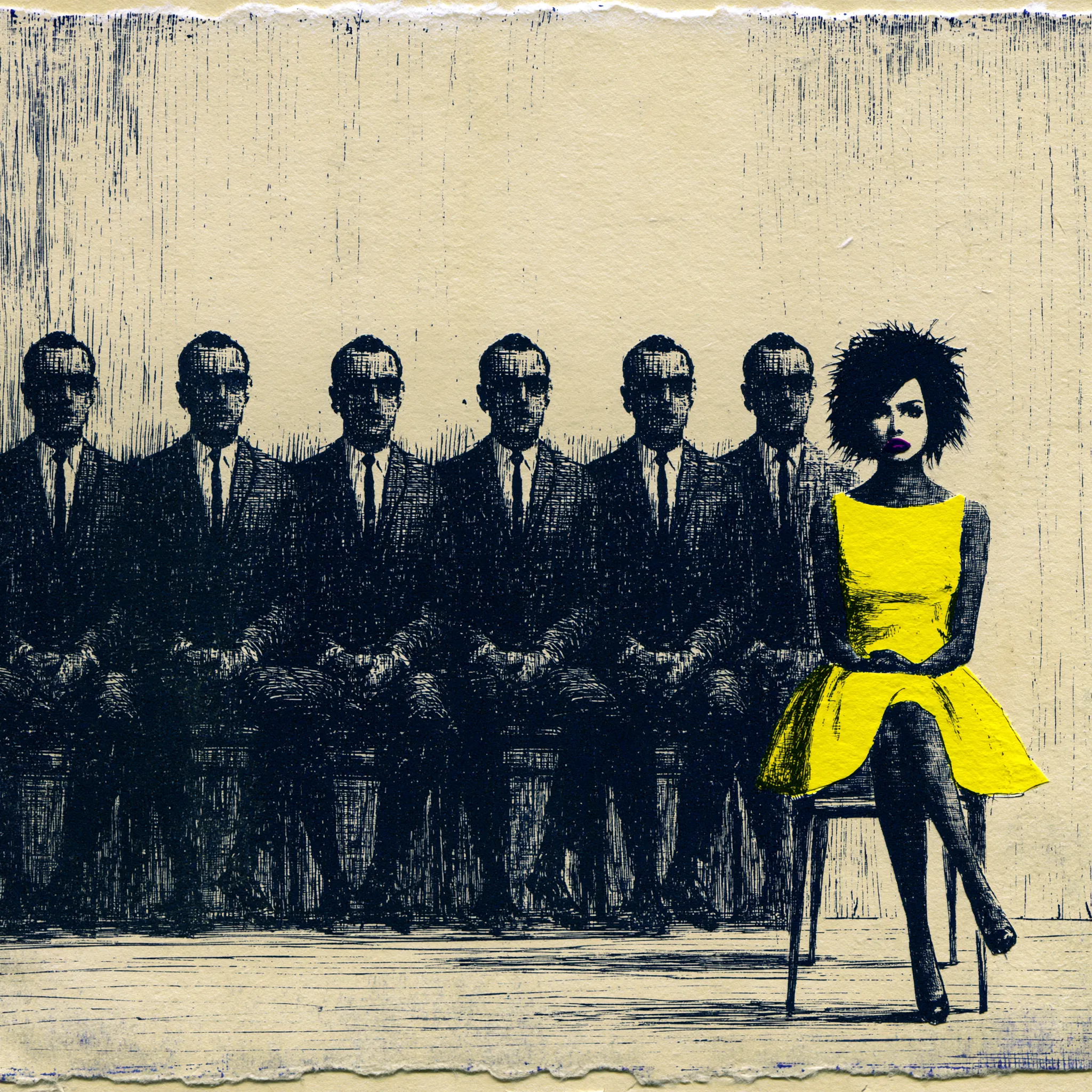
Illustration courtesy of MidJourney