
Every ad dollar we spend fuels algorithms we know are harming people, chewing up the environment, and stoking hate between neighbors.
I must face the fact that my beloved field of marketing contributes to some of society’s biggest problems.
It pains me to write about this. I mean, I’m part of the problem, too. But it’s time to start this conversation because the traditional marketing approach is at a breaking point.
- AI-driven amplification of addiction
- Deep fake, misinformation, the decline of trust
- Easy AI content requires more energy consumption
- U.S. Surgeon General’s warnings on youth mental health and social media
We need to consider what it means to lead and sponsor ethically-sourced marketing.
Let’s break this problem down into four categories today:
- ADDICTION
- DIVISION
- ENERGY / ENVIRONMENT
- OPERATING WITH VALUES
1. Addiction
Back in my corporate days, I dreamed of creating a product or service so great that people would be addicted to it. I remember saying those words out loud.
Before the internet, the chance of doing that was slim, especially in B2B. We didn’t have the repetitive internet memes, challenges, or reels that could drive people down a rabbit hole.


Here’s the basic math nobody wants to talk about. Engagement equals money. Five billion people spending over two hours a day on these platforms? That’s not accidental. That’s the entire business model. Every scroll, every like, every second you spend staring at your screen — that’s a data point being harvested to sell more targeted ads.
The platforms use artificial intelligence to analyze your emotions, habits, and vulnerabilities. They’re predicting human behavior at scale.
But here’s where it gets really interesting, and honestly, a bit sinister. The designers of these platforms have deliberately borrowed from the playbook of slot machines and casinos. Infinite scroll. Autoplay. Those little notifications that pop up right when you’re about to put the phone down? They’re triggering the same reward circuits that gambling does.
It’s the variable reward schedule that behavioral psychologists have understood for decades, now deployed across billions of devices.
Think about the “like” button. It’s a dopamine delivery system. You post something, and you get that little hit of validation when people engage. So you post again. And again. The platform has essentially weaponized human psychology for engagement.
How many of you optimize likes and engagement as an essential part of your career success?
It gets worse. Younger brains are exponentially more susceptible to this stuff because they’re still developing the neurological circuits for impulse control and delayed gratification. U.S. children generate more than $11 billion in advertising revenue for major social media platforms.
Let that sink in. $11 billion extracted from the psychological vulnerabilities of kids who don’t yet have the brain development to resist these systems.
The platforms give lip service to parental controls and safeguards, but they don’t care.
Your marketing dollars fuel the addiction machine. Digital ad dollars are hurting children.
Addiction is the foundation, but the consequences don’t stop at endless scrolling. They spill into something darker.
2. Division
In the social media world we all love, hate is good for business.
A Wall Street Journal investigative report revealed that Facebook knew that its core social media product makes the world more toxic and divided.
“Our algorithms exploit the human brain’s attraction to divisiveness,” read a slide from an internal presentation. “If left unchecked,” it warned, Facebook would feed users “more and more divisive content in an effort to gain user attention & increase time on the platform.”
One example: 64 percent of the growth in online extremist groups was fueled by Facebook’s own recommendation algorithms!
The company assigned a high-level team to develop a plan to combat this issue … and they did. But then Mark Zuckerberg shelved the basic research and blocked efforts to apply its conclusions to Facebook products. In fact, the Facebook leader has publicly denied his company’s findings and recommendations.
Why?
An internal report said that moderating hate was anti-growth.
That makes me sick. When hate becomes a growth strategy, every advertiser becomes a silent financier of dysfunction.
While the emotional toll of division is staggering, the physical toll on the planet is just beginning to surface.
3. Energy and Environmental Impact
Last year, I was honored to be a keynote speaker at the Belgian Association of Marketing’s annual conference, a first-class event. It was there that I met Dr. Victoria Hurth. She introduced the audience to a new way of looking at marketing and its impact on the environment. I felt ashamed that I had never really considered these realities.

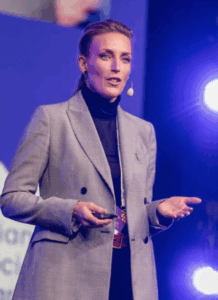
Victoria Hurth
Marketing, she said, is the engine of demand. That’s our superpower. And it’s also part of the environmental problem.
When we stimulate desire, we stimulate production, shipping, packaging, and, too often, waste. The question isn’t whether marketing affects the environment. It’s whether we’re willing to measure it.
Even “digital” isn’t clean.
Programmatic ads ride on massive server networks that consume real energy. An industry analysis shows the carbon cost of every ad impression — grams of CO? tied directly to the ads we place. One publisher cut its emissions 70% with smarter supply-path decisions, with no revenue loss.
E-commerce? It helps when it consolidates freight … until fast shipping and high return rates obliterate any benefit. U.S. product returns alone generated 24 million metric tons of CO? last year and sent billions of pounds of goods to landfills.
Even our content diet carries a carbon footprint. Streaming and online video now account for an estimated 3–4 percent of global emissions. “Virtual” isn’t virtual. It’s powered by real data centers, real devices, real infrastructure.
And then there’s AI.
OpenAI’s planned chip network may consume 250 gigawatts of power by 2033. That’s one-fifth of America’s total electric generation capacity today. If OpenAI were a country, it would be the seventh-largest electricity producer on the planet. Energy prices are already rising nationwide, as is the environmental impact.
So yes, even creativity now carries a carbon cost.
Dr. Hurth argues that businesses must prioritize human sustainability over profits. It sounds idealistic — until you realize the alternative.
We’re not just creating demand. We’re creating emissions.
4. Operating with values
In the early days of web marketing, I attended a presentation by an SEO “pioneer.” He had hired home-bound disabled people to pose as online commenters in an effort to impact his customers’ search results.
When it came time for the Q&A, I asked, “How do you live with yourself? This is so unethical!”
He responded, “It works. And if I didn’t do it, somebody else would.”
Too often, marketers opt for “what works” and turn a blind eye to the holistic impact of their actions on the world and our customers. A brand strategist is a role in which you are effectively a cosmetic surgeon for capital.
While hiring people to fake our content seems extreme, aren’t we doing the same thing today with AI? Half the comments left on my content are AI-generated fakes.
I learned at a recent meeting that 85% of companies use AI to generate content and that, on average, their content output has increased by 45%.
To what end? To replace humans? To add to the barrage of noise we must endure to find truth? To consume vast amounts of energy and clean water to generate AI slop?
Can we keep one eye on the bottom line and one on our moral compass? If we don’t reclaim the soul of our work, the machines will do it for us.
What do we do about it?
First, let me emphasize that I’m proud to be a marketer. The marketer is the creator, the innovator, the front line of our business. We can be the beacon, shining a light on the good and the worthy.
Throughout history, advertising and marketing have played a role in positive societal change and in creating demand for life-changing products.
Second, the weight of these problems does not necessarily fall solely on us. We’re expected to work in a deeply flawed social media / digital environment beyond our control. Any real change would require complex systemic changes.
So what’s the point of this post?
I’m willing to bet every person reading this has had pain in their heart over the online safety of our children, the impact of global warming, and the divisions that are tearing countries and families apart.
Am I suggesting that we sell less? Quit digital advertising? Abandon profitability?
No. But at a minimum, we need to open this conversation and re-frame the marketing profession in a more holistic context. Any change begins with awareness.
What if marketing became the world’s most powerful engine for human flourishing instead of manipulation? What if innovation, storytelling, and creativity were measured not just by impressions but by the impact we have on the people we serve?”
I don’t have the answers. But here are a few ideas I picked up from Dr. Hurth and others.
Reframe success.
Replace metrics like engagement and impressions with impact: well-being, trust, sustainability, and authentic connection. Isn’t this why we love the Patagonia brand? It can be done.
Track “advertised emissions,” addiction time, and content energy use alongside ROI. Transparency changes behavior. Above, I cited the Scope3 research. One publisher cut average CO2 per thousand impressions by about 70% through supply-path optimization, with no revenue loss.
Design for restraint.
Use creativity to promote durability, repair, and reuse. Ask: “Does this campaign help or harm long-term human flourishing?” Re-use is a significant priority for Gen Z shoppers. A positive trend!
Invest in ethical tech.
Support platforms and partners committed to transparency, safety, and carbon-neutral operations. The energy efficiency of most technologies (especially AI) is increasing at a breathtaking rate. Are you aware of the relative energy use of your tech stack?
Lead with humanity.
Make ethics a competitive advantage. Reward teams for doing the right thing, not just the fastest or cheapest.
“Ethically Sourced Marketing” is a new idea. Corporate culture doesn’t change without a leader who makes this a priority. If this idea catches on, it will likely be because one person embraces the change and sets an example.
Dramatic change is possible
Here’s a point of inspiration.
Madewell, a German-based clothing retailer, is working to eliminate plastics, aiming to have 100% of its packaging be sustainably sourced and free of virgin plastic by the end of this year. The brand is also reducing plastic in its products by increasing its use of sustainably sourced fibers and recycled materials, such as recycled insulation and recycled nylon, and is committed to achieving carbon neutrality by 2030.
I read that the CEO is even trying to eliminate plastic pens in their offices.
Can you imagine how difficult it would be to eliminate all plastic in your company? But one leader is driving this change, shaping a company culture that makes a difference on a vast scale.
If one company can eliminate plastic, I have hope that somebody out there can eliminate marketing and advertising that contribute to hate, polarization, addiction, and waste.


There has never been a better time to re-evaluate what we do and how we do it.
If positive change seems unattainable, here’s a good place to start: If you are directly or indirectly doing things that people hate, STOP IT.
Double down on what people love. Trust. Transparency. Humanity. Community. Ethics. A responsible, measurable environmental impact.
Eugene Healey wrote:
“We have to fight under the contradictions of capitalism. That’s non-negotiable. But we should still get to do so by creating beautiful things. In that, we can find meaning.
“If you’re a marketer, make things you believe should exist. If you’re a senior marketer, make the case for the existence of beautiful things. Look at your brand advertising, your out-of-home, hell, even your performance ads, and ask yourself: does this make some meaningful contribution to public space, or at the very least not deplete it?”
The Most Human Company Wins. Keep fighting the good fight.
Help me start this conversation by sharing this post with your marketing and advertising friends. Thank you.

Follow Mark on Twitter, LinkedIn, YouTube, and Instagram
Illustration courtesy MidJourney