


 You’re in marketing for one reason: Grow. Grow your company, reputation, customers, impact, profits. Grow yourself. This is a community that will help. It will stretch your mind, connect you to fascinating people, and provide some fun along the way. I am so glad you’re here. -Mark Schaefer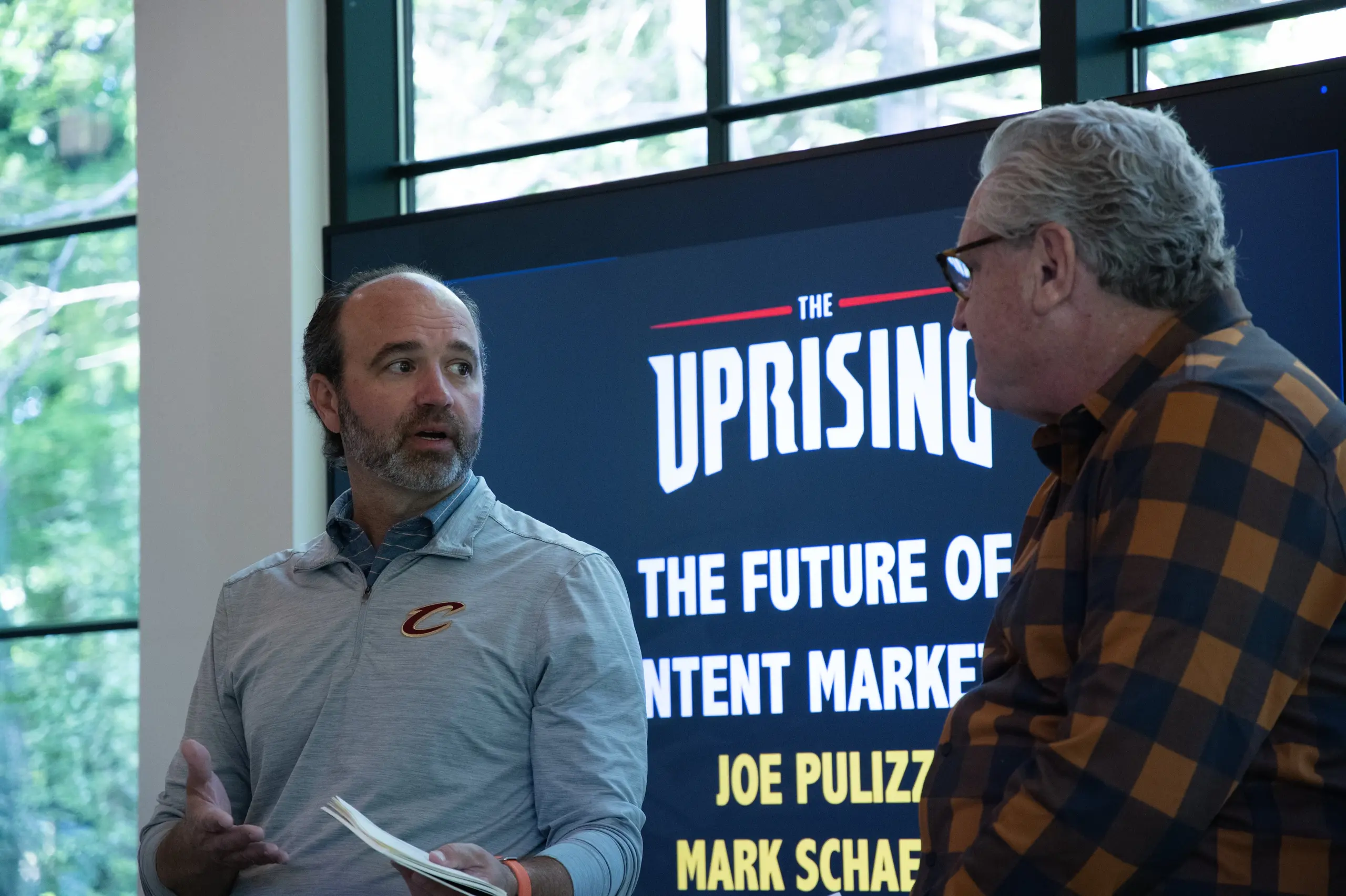
My friend Joe Pulizzi attended my Uprising retreat and was so moved by the experience that he wrote a beautiful lesson about it in his newsletter for content creators, The Tilt.
Joe and I are aligned on most marketing ideas, and his conclusion at the end of the post was profound and eloquent: “You don’t start with the room.”
He was reinforcing the idea that nobody just starts with a premium event, a smash YouTube channel, or a must-read newsletter. You have to earn that “room.” Or, in the case of my retreat, literally a room.
He wrote this so elegantly that, with his permission, I’ve quoted some of his highlights here. I think you’ll love his wisdom:

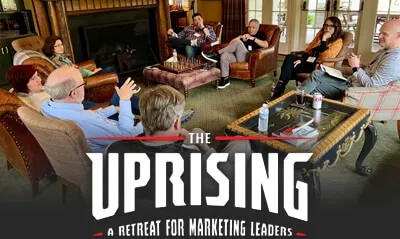
Last week I spent three days at Mark Schaefer’s The Uprising marketing retreat in Tennessee. It was small, around 40 people, and that was the point.
 The room was filled with smart marketers, entrepreneurs, authors, consultants, and creators. But what stood out was not just the intelligence in the room. It was how quickly people became useful to one another. Helpful. Honest. Shockingly vulnerable.
That does not happen by accident. It happens when the right people are brought together around the right idea, with enough trust already in the room for something meaningful to happen.
Over three days of conversations, presentations, sidebars, meals, and big questions about where all this is going, one idea kept coming back to me.
In the next 12 to 18 months, small, trusted communities will matter more than ever.
Not because community is trendy. And not because AI is going to destroy everything tomorrow.
Because uncertainty is rising.
Search is changing. Discovery is changing. Content is exploding. Trust is harder to earn and easier to lose. People are overwhelmed, distracted, and suspicious. At the same time, they are desperate to find other people who understand what they are dealing with. That is where community becomes incredibly powerful.
But there’s a problem.
Everyone now wants to “build a community.”
That sounds wonderful. It is also mostly wrong.
Community Is Not the First Step
You do not build a community first. You build the reason a community should exist. That’s the part most people want to skip.
They launch the group. They open the Slack channel. They create the Discord server. They announce the membership. They schedule the webinar. They build the event page.
And then they wonder why nobody shows up.
The mistake is simple. They built the campfire before anyone had a reason to sit down in front of it.
A community is not a Facebook group. It is not a LinkedIn group. It is not a membership site. It is not a monthly Zoom call. It is not an event. Those are containers.
The community is the trust inside the container.
It is the shared language, shared struggle, shared progress, and repeated interaction. It is the feeling that says, “These are my people.” It is the sense that if you disappeared, someone would notice.
Mark Did Not Start With a Room
This is what made The Uprising such a good reminder.
Mark did not just rent a space, invite some people, and magically create a community. He had already done the work.
For years, Mark has published, spoken, written books, shared ideas, challenged assumptions, and built trust around a clear point of view. People came to The Uprising because they already had a reason to believe the room would matter.
The event was not the beginning of the community. It was an expression of the community. It’s where the community happened to be at that particular moment.
This is what so many people miss. They see the outcome and copy the container. They see the event, but not the years of trust. They see the membership, but not the audience.
Back to me.
Joe and I preach from the same hymnbook when it comes to community and its importance in the AI Age.
So how do you get there?
There is a process. It is not quick. It is not easy. But it works. This is the process I teach in my personal branding master class:
1. Where do you fit in your industry or marketplace?
Figure out your unique angle. What problem do you solve, and how do you uniquely solve it?
How do you finish this sentence: “Only I …”
That might seem intimidating but I’ve never had a class participant where we haven;t been able to figure that out. There’s still a big world of opportunity out there.
2. Find Your Space
Now you have the story to tell the world?
Joe was also very specific on this advice: Pick One Main Platform
“This is where people get overwhelmed,” Joe wrote. “They think they need a podcast, newsletter, YouTube channel, LinkedIn strategy, Instagram Reels, TikTok presence, webinar series, book project, and community all at the same time. Do not do that. Pick one main platform. One.”
To stand out, you have to be great. And you can’t be great in 12 places.
3. Stick to a Consistent Schedule
If you take my class, you will hear one word more than any other — “consistency.”
Consistency is more important than genius.
Once you begin, give yourself 18 months at least to see if it’s working. You can build your “room,” but you have to keep showing up. This also has powerful SEO and AI visibility advantages, of course.
You’ve implied to your audience that you’re going to help them solve a problem.
“The promise does not need to be clever, ” Joe said, “It needs to be clear.”
Over time, you become part of your audience’s weekly routine. Your goal is to become a habit.
4. Build Your Audience
Joe advised, “Audience building is not just publishing. It is relationship building. This is the part that gets missed because it is not scalable at first.”
He offered specific advice:
Make a list of 20 people who matter to the future of the audience you want to serve. They could be peers, customers, readers, event organizers, authors, podcast hosts, niche experts, future collaborators, or people already gathering the audience you care about.
Then help them. Share their work. Comment with substance. Interview them. Send the useful email. Introduce them to someone. Buy their book. Attend their event. Meet them in person when you can.
The future may be AI-powered, but trust is still built person by person.
5. Audience Precedes Community
Most creators miss the biggest opportunity. Once they build an audience, they stop there. But the most value, the most fun, the most connection comes through a community.
A community differs from an audience in three ways:
- There is communion. People know each other and become friends.
- There is a shared purpose.
- There is a shared direction (which might change over time as the community pulls you forward).
This is the room. This will matter the most in the AI Era.
How do you know you’re ready? Do you have a few super fans? It doesn’t have to be a big group. Maybe 5-10 people who just want to know more. They comment on your posts. They ask questions. They’re excited about your ideas.
If you want to know a whole lot more about community-building, please take a look at the book Belonging to the Brand: Why Community is the Last Great Marketing Strategy.
Build the Reason First
I’ll let Joe Pulizzi take us home on this post. Here are some of his concluding comments:
I keep thinking about that room at The Uprising.
The trust. The conversations. The openness. The willingness to help. The feeling that the people there were not just attending another event, but participating in something that mattered to them.
That is rare. I believe more of us are going to need that.
The people who have real trust with a specific audience will have an advantage. The people who have direct relationships will have an advantage. The people who are known for something will have an advantage.
Start with the person you want to serve. Start with the problem they are embarrassed to admit. Start with the one platform you can commit to. Start with the 20 people you can help. Start with a promise you can keep every week.
Do that long enough, and the community has a chance to appear.
Build the reason first. The campfire comes later.
 Need a keynote speaker? Mark Schaefer is the most trusted voice in marketing. Your conference guests will buzz about his insights long after your event! Mark is the author of some of the world’s bestselling marketing books, a college educator, and an advisor to many of the world’s largest brands. Contact Mark to have him bring a fun, meaningful, and memorable presentation to your company event or conference.