


 You’re in marketing for one reason: Grow. Grow your company, reputation, customers, impact, profits. Grow yourself. This is a community that will help. It will stretch your mind, connect you to fascinating people, and provide some fun along the way. I am so glad you’re here. -Mark Schaefer
It’s time for an AI reality check. This wake-up call comes courtesy of The Guardian, which reported that a guy just lost $2 million because he may have committed the crime of Attempted AI.
A $2 million publishing deal for Jerry Falade’s debut crime novel, Call Me, I’ll Hide the Body, collapsed after his literary agents withdrew the manuscript over concerns about potential AI use.
The agents said they could not authenticate how the draft evolved from origin to completion, leading them to drop the author after “aspects of the author’s story changed.” In response, the author firmly denied using AI and criticized the industry’s use of unreliable AI-detection tools.
And here is the wake-up call. Is it justice to penalize an editor for an AI assist? How does this play out in your world where AI is in the middle of everything?
To put things in a rational perspective, oblige me for a moment as I share a story from nearly a hundred years ago: the story of Thomas Wolfe.
The editor who cried Wolfe
 Thomas Wolfe, who grew up near me, is one of America’s most beloved writers. His books, including Look Homeward, Angel, are standard issue for American literature courses. The irony is, Wolfe was a genius, but an incompetent writer.
Wolfe wrote by scrawling words on a page longhand and tossing each finished page into a wooden crate without a second glance. When his editor, Maxwell Perkins, finally demanded the overdue manuscript for his first novel, Wolfe delivered a crate stuffed with roughly a million words across some three thousand unnumbered pages. Then, a few days later, he brought in another half-million words.
For two years, night after night, Perkins sat with Wolfe and cut. Even after deleting 90,000 words, his editor struggled to find a book inside this landslide.
Thomas Wolfe became an international bestselling author. But it was the heroic work of Perkins that turned raw genius into something a reader could comprehend.
In the pantheon of literary greats, Wolfe was not an outlier. Ernest Hemingway, T.S. Eliot, and Raymond Carver all wrote novels that relied on invasive surgery from editors.
Now, back to the AI story.
I can’t afford to have an editor for two years
So what about this author who is accused of using AI to augment his work?
What if he did?
How is that any different from Thomas Wolfe working with a human editor for two years to write a marketable book? It seems hypocritical to publicly humiliate an author for an editing assist when massive editorial corrections have been a standard industry practice for centuries.
Perhaps the real question isn’t about editing your work, but about faking your work. And that brings us to …
The Milli Vanilli Line
On July 21, 1989, the pop duo Milli Vanilli panicked and ran off a concert stage when a pre-recorded track for their hit “Girl You Know It’s True” skipped in front of thousands of fans.
Following the public embarrassment and mounting rumors about lip-syncing performances, their producer finally confessed that Rob Pilatus and Fab Morvan had never sung a single note on their multi-platinum album. The humiliated duo became the first artists in history to have their Grammy Award revoked.
My point is, you can use AI to help you create and edit content … until you cross the Milli Vanilli Line and risk humiliation as a fake.
There is a “yay for humans” segment of creators who believe only pure human content is legitimate, and that AI can never meet or exceed the creativity and quality of human effort. I am not in that camp. AI is empowering. It can create spectacular, compelling content indistinguishable from human efforts, and you should use it wisely to help grow your business and your brand. Your competitors are.
However …
The Green sentence
A few weeks ago, Hank Green found that for his audience, the Milli Vanilli Line was one sentence.
Green is one of the internet’s most beloved creators — a science educator, novelist, and entrepreneur who has been publishing online videos since 2007. Some of his fans refer to him as “uncle.” Trust was his entire business.
Then, in one video, his reputation crashed. In a segment answering an audience question, Green said, “I appreciate the pushback.” His tech-savvy audience immediately recognized that phrase as a fingerprint of AI-generated content. The clip went viral. A fan revolt followed.
Green didn’t just apologize; he indicted his own habits. “The level of dopamine that I’ve been getting from interacting with LLMs,” he wrote, “is not healthy for me or good for the world.” He admitted he’d overcommitted and leaned on AI to push out more videos faster.
For this audience, the mere scent of AI was disqualifying. For Hank Green, the ability to produce fast — and carelessly — eliminated the intellectual friction of his trusted human content.
“This incident made me think a lot about my job,” he said. “I wanted to create more and more content and used AI to help. But the internet does not really need more videos. It needs more of me. My job is being me.”
The Milli Vanilli Line is when your audience notices. It’s not just detection. It’s substitution.
Reality check
AI surrounds us like the air that we breathe. It is baked into everything. Some day we won’t need to explain it, let alone apologize for it. We’ll look back at this time, and think “Sheesh … remember when we had AI disclosure policies?”
But for now, the overriding rule must be this: Will using AI in any way breach trust in me and my brand?
Over time, I don’t think the existential issue will be detection. It will be substitution.
Let’s get back to basics. Trust first, trust last, trust in everything you do. Then figure out how to use AI responsibly.
 Need a keynote speaker? Mark Schaefer is the most trusted voice in marketing. Your conference guests will buzz about his insights long after your event! Mark is the author of some of the world’s bestselling marketing books, a college educator, and an advisor to many of the world’s largest brands. Contact Mark to have him bring a fun, meaningful, and memorable presentation to your company event or conference.
Follow Mark on Twitter, LinkedIn, YouTube, and Instagram
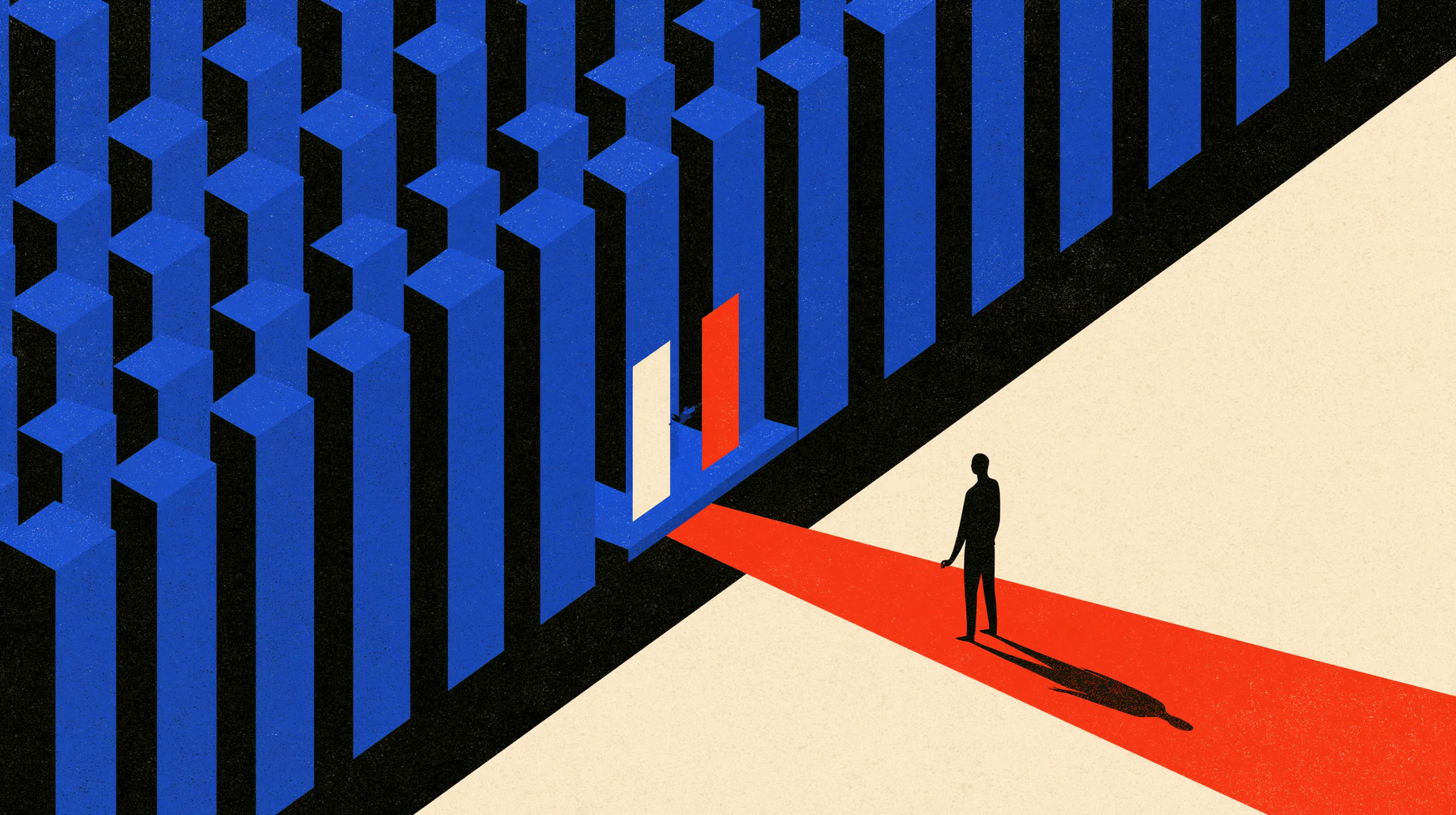
Image courtesy MidJourney