I’ve been blogging for 16 years, giving away all my best ideas and advice. I spent time thinking about monetizing my writing by moving to a subscription model on Substack. What I concluded might surprise you and perhaps guide your own monetization strategy.
Today I’ll cover:
- My current content monetization strategy
- A high-level view of Medium versus Substack
- My in-depth analysis of the risks and opportunities with Substack
- A final conclusion
Allow me to share a little story about how blogging drives my business.
The inbound marketing model
A few years ago, I received this email:
“Hi Mark. I’ve been reading your blog for three years and have become a real fan. I purchased your latest book and wanted to let you know it is one of the best business books I’ve read in the last 10 years. Just thought it was time to tell you how much I appreciate your work.”
It was signed by the CMO of a Fortune 100 company.
Two years later, he hired me to help organize a new content marketing department. I didn’t bid on the job. He just hired me because he grew to know me and trust me through my content.
Let’s break this down and reveal the classic “inbound” marketing strategy:
- This person discovered my content and subscribed. I didn’t pay anything for this connection. It was organic, driven by the helpful content I freely put into the world.
- After reading my content for several years, a trusting relationship developed. It was one-way, of course, but he grew to trust me entirely through the blog content.
- Three years into this relationship, he bought a book, his first purchase from me.
- Five years after he subscribed to the blog, he hired me for my most profitable assignment of the year.
And this is the way the world has worked for me, over and over again.
I’ve never made any money directly from my blog content — no ads, paid links, or sponsored posts. But when people trust my content, they hire me for speeches, workshops, and consulting. They’ll buy my books, purchase a consulting hour, or come to my Uprising retreat.
I’ve had a successful, profitable career by giving away content for free.
But many people are earning significant income on Substack. As I move to a slower pace of life, is it time for me to monetize my content directly and charge for it?
Substack versus Medium
There are many ways to monetize content directly, but the two big ones are Medium and Substack.
 So far, my strategy has been to publish content on my website and then publish for free on both of these sites. Since both platforms have millions of subscribers, this allows my content to reach new audiences. For example, I have more than 45,000 followers on Medium. Medium articles also tend to rank well on Google.
Medium has another advantage — you’re paid by the number of people who read your content. By simply re-publishing a blog post on Medium, I average a modest $250/month, which is better than the imaginary benefit of Likes and retweets. And, there was an unforgettable month I made $10,000 on Medium. It’s like hitting that one great golf shot. It could happen again, right?
High-earning posts result from a Medium “boost” that floats your article beyond your audience so many more people read it. When does Medium boost? Who knows. It’s unpredictable and frustrating.
Substack has a smaller user base compared to Medium, but offers a business model with a more reliable income stream. People pay for your content through a subscription, and as long as you provide value, the income flows. You’re in charge of your revenue potential by growing your paid audience rather than relying on an algorithmic Medium boost.
I currently publish for free on Substack — why not? I’ve attracted far fewer followers there compared to Medium … less than 1,000. And I’ve never made a dime there because to succeed, you must commit to a subscription model and refrain from publishing anywhere else. Many people are making a healthy living on Substack. Is it time for me to finally have a reliable income stream directly from my content?
The Substack life
Focusing on Substack as an income stream would require major changes:
- I’d have to create at least one in-depth post per week, and maybe more (I can do that).
- I would stop publishing original blog content on my own website.
- I’d have to develop and grow a Substack community with bonus events and content to add value.
- I would have to move my current blog/Medium audience to a paid subscription on Substack.
While I can commit to creating great content every week, the other changes represent significant risks. Let’s look at each one.
1. The end of the content on my site
As I researched this opportunity, I looked at the websites of Substack stars. If you click “blog,” you’ll find a link to Substack. There is no web-based blog any more.
There is a serious functional implication to this. Without regular, fresh content on my site, my SEO/AI signals dry up. My website isn’t just a blog; it’s a legacy media asset. It’s a lead generation machine.
If the site goes dormant, I lose:
-
Authority signals
-
Fresh content triggers
-
Long-tail organic reach
-
Visibility when AI search dominance arrives
That is just too much to lose. The sensible option would be to create two different posts for my site and for Substack. Double the work? No thanks.
2. Moving my audience to Substack
How many of my free blog readers will pay for Substack content? The research shows it will be 5% or less.
But those “free” readers have fueled my entire business model.
-
Book sales
-
Speaking leads
-
Media invitations
-
Uprising retreat attendees
-
Word-of-mouth leads
The average annual subscription price on Substack is $96. Assuming that 5% of my subscribers move, it’s probably not worth the financial risk.
And there’s another consideration. What if Substack goes out of business?
3. Building a community
The most successful Substack pros fully leverage the platform’s ability to create community through commenting, special events, and exclusive livestreams.
This would be a major benefit of Substack. But I already have a community called RISE. I’ve poured my heart and soul into that community, and I love the people there. I don’t have the need or bandwidth to duplicate that effort.
So a Substack community has no appeal or financial benefit.
The overarching goal
In summary, I certainly have an opportunity to monetize through Substack, but the risk of losing my SEO value and large audience overwhelms the benefits.
In the end, it comes down to my goals at this stage in my life. Money is less important than it was ten years ago. I want my ideas to spread. I want to help and teach. I want to find interesting projects that challenge me and connect me to cool people. I want to maintain a healthy and profitable speaking career.
A regular Substack income jeopardizes:
- SEO discovery for my website
- Serendipity (that random CMO, journalist, or CEO finding me)
- Long-tail inbound traffic
- A large, loyal audience
Monetizing content directly could actually shrink my economic surface area.
At this point in my life, a wide audience and the highest level of discoverability outweigh the potential of a steady income. I’ll stay the course and monetize through the indirect method.
Drop me a line and let me know if you’ve come up with a different strategy for your content.
 Need an inspiring keynote speaker? Mark Schaefer is the most trusted voice in marketing. Your conference guests will buzz about his insights long after your event! Mark is the author of some of the world’s bestselling marketing books, a college educator, and an advisor to many of the world’s largest brands. Contact Mark to have him bring a fun, meaningful, and memorable presentation to your company event or conference.
Follow Mark on Twitter, LinkedIn, YouTube, and Instagram
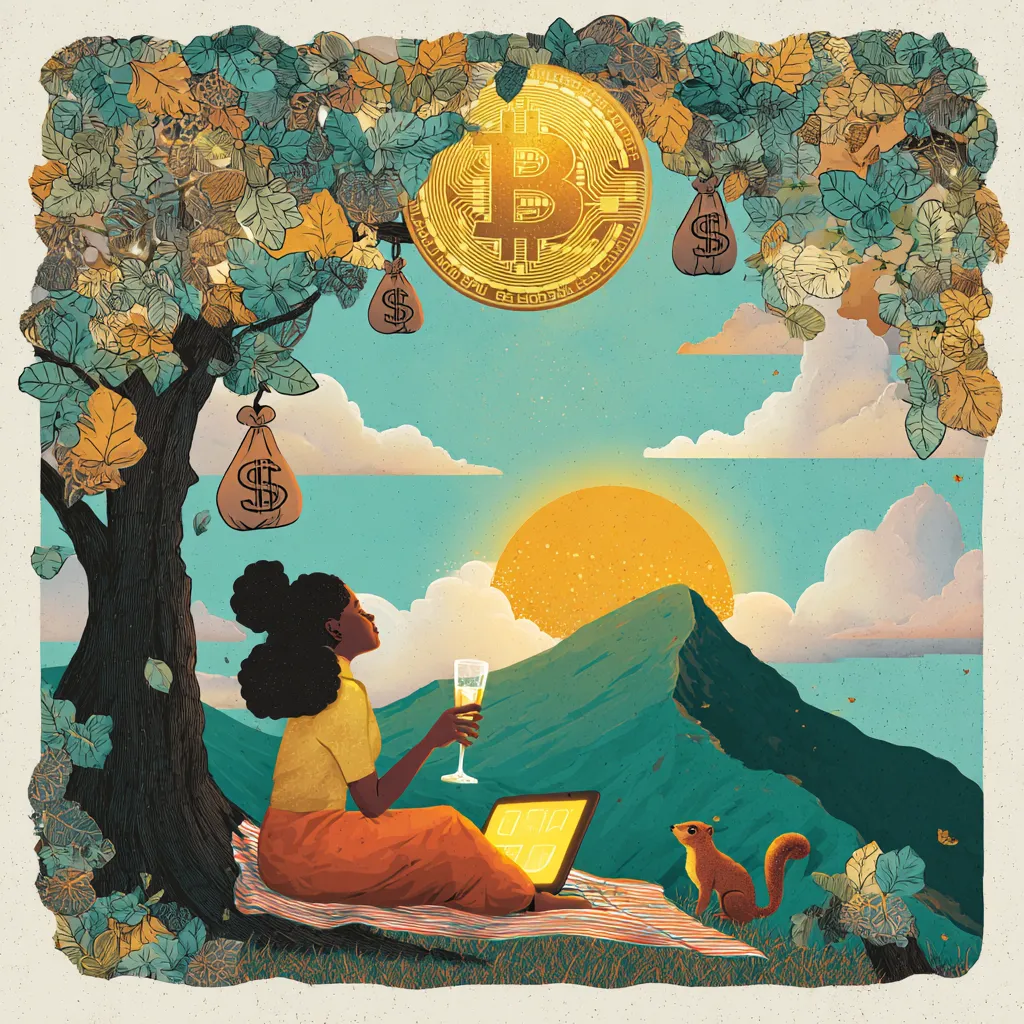
Illustration courtesy MidJourney